Nov
9
2009
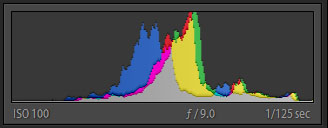
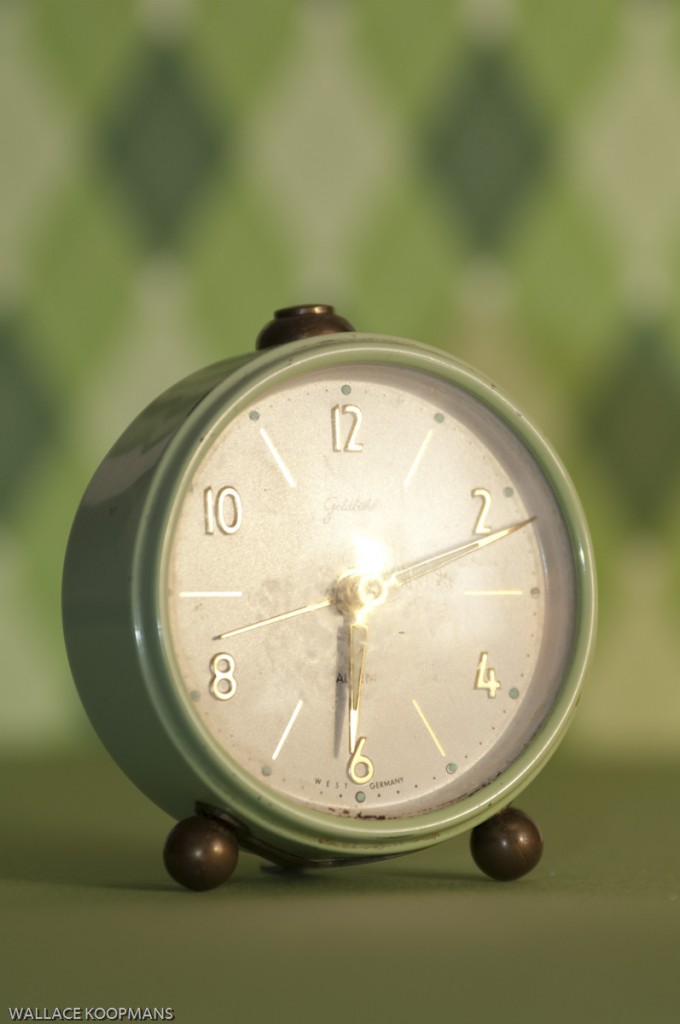
Colours that are analogous, such as those that lie next to each other on a colour wheel, or are generally neutral can be made more harmonious through tone. What is tone? If you think of the colours in an image in terms of black and white the value of that color or how dark or light it is, is it’s tonal value. You can see this in the histogram for this image, all the colours fall within the middle range or middle key. There is a danger that an image may be static or flat when all the values are so similar and when painting one would likely add something to offset this. However, the intent of this image is to evoke the feeling of a bright warm morning and the harmony of the tones and colours helps produce this.

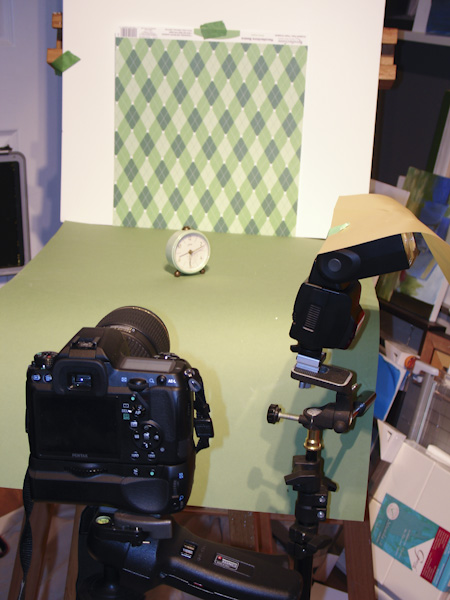
The setup
Creating this image was done by placing the clock on a piece of foam-core. This was in front of a piece of paper which was used to mimic wallpaper and was selected to compliment the clock. A single flash with a gold translucent material was aimed at another piece of foam-core which would then give an illusion of a window in the reflection of the face of the clock. A word of advice, check the time on a clock if your trying to represent a particular time. Initially I must have been in the high arctic because I had morning light at 2:42 AM. So this one is afternoon light, problem solved.
Another variation
no comments | posted in Composition, Photography
Nov
8
2009
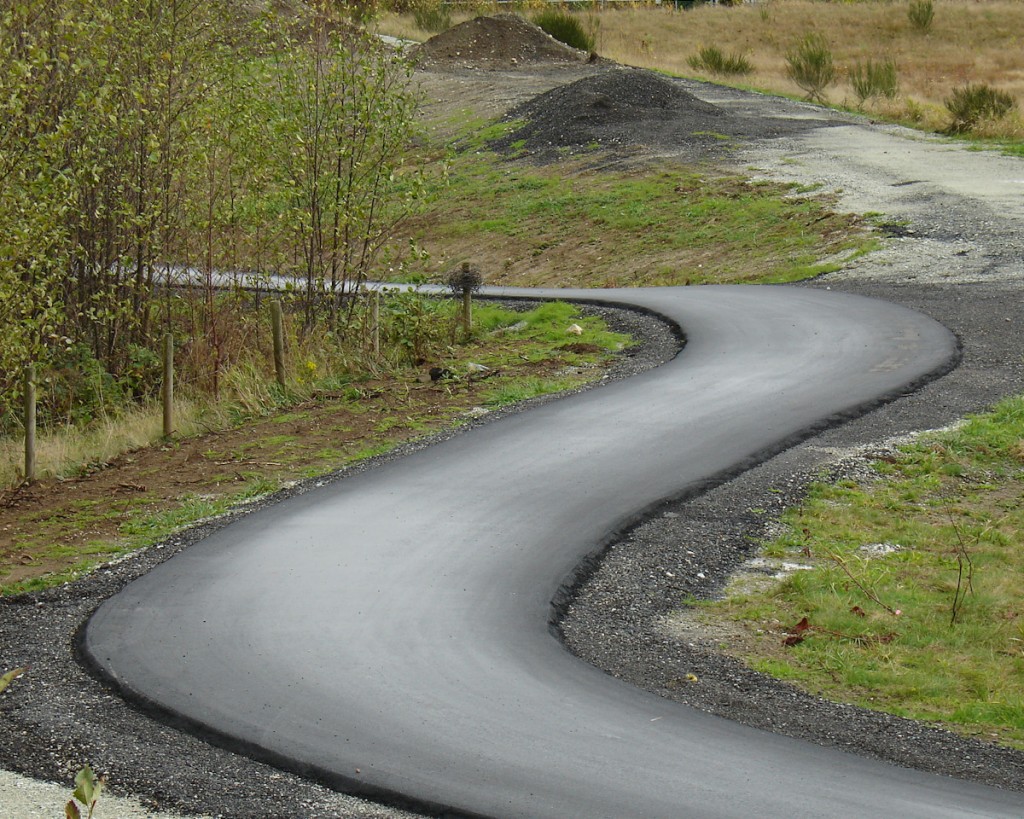
I went for a walk today with my Sony DSC-V3 which I use mostly for infrared photography. There are software filters that purport to giving an IR effect to photo’s but really they are still manipulating the visible light that was captured. Here is a scene shot in colour and IR as well as a version created in Photoshop from the colour photo to mimic Kodak HIE. I obviously prefer the last one, the actual IR shot or I wouldn’t continue to use the camera in this way.
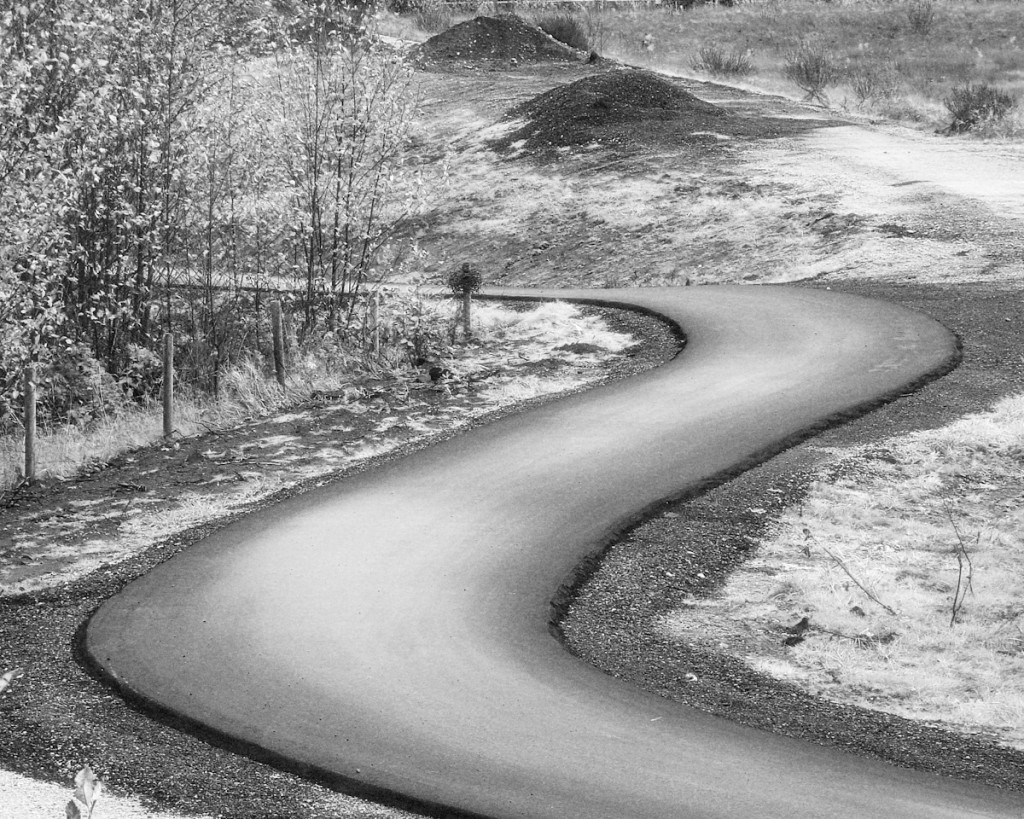
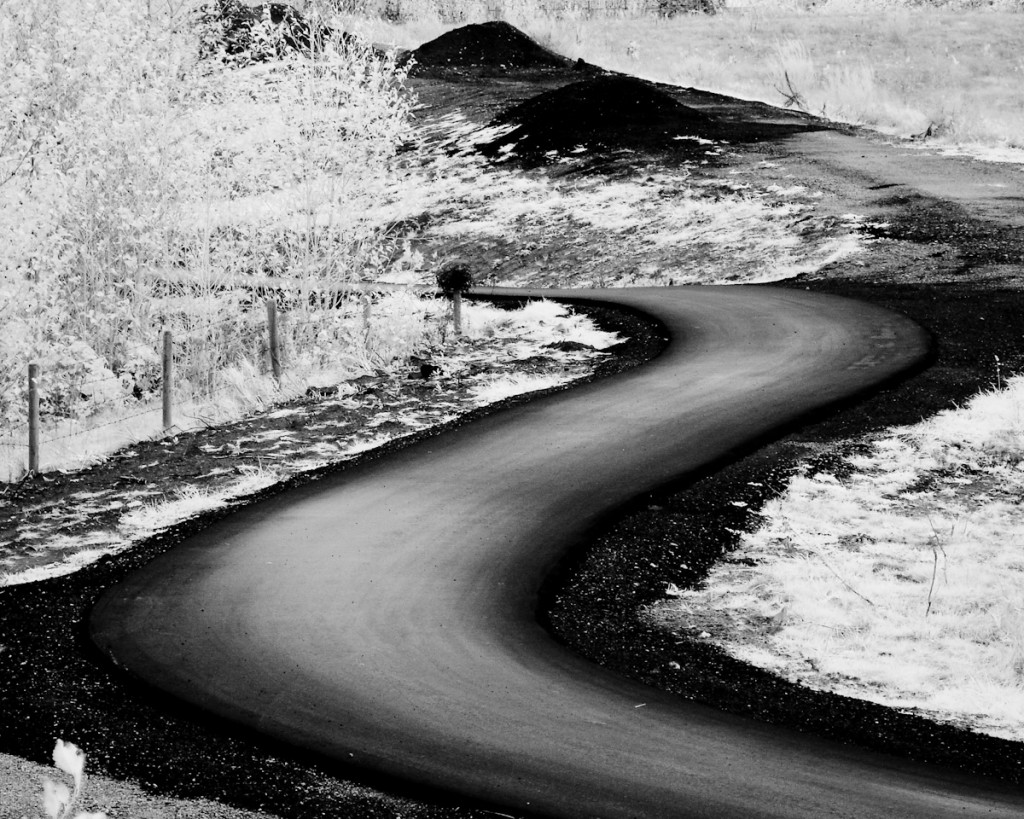
The actual method is to set the camera on night shot mode, which internally moves an IR blocking filter out of the imaging path. This allows both Infrared light and visible light to reach the sensor. The visible light however is blocked by a Rodenstock RG715 filter that as it’s name suggests cuts off light transmission bellow 715 nanometers. A ND8 filter is also used to cut down on the amount of light reaching the sensor. These filters are held in front of the camera in an assemblage of adapters and filters.
Here are some more IR pictures from today.
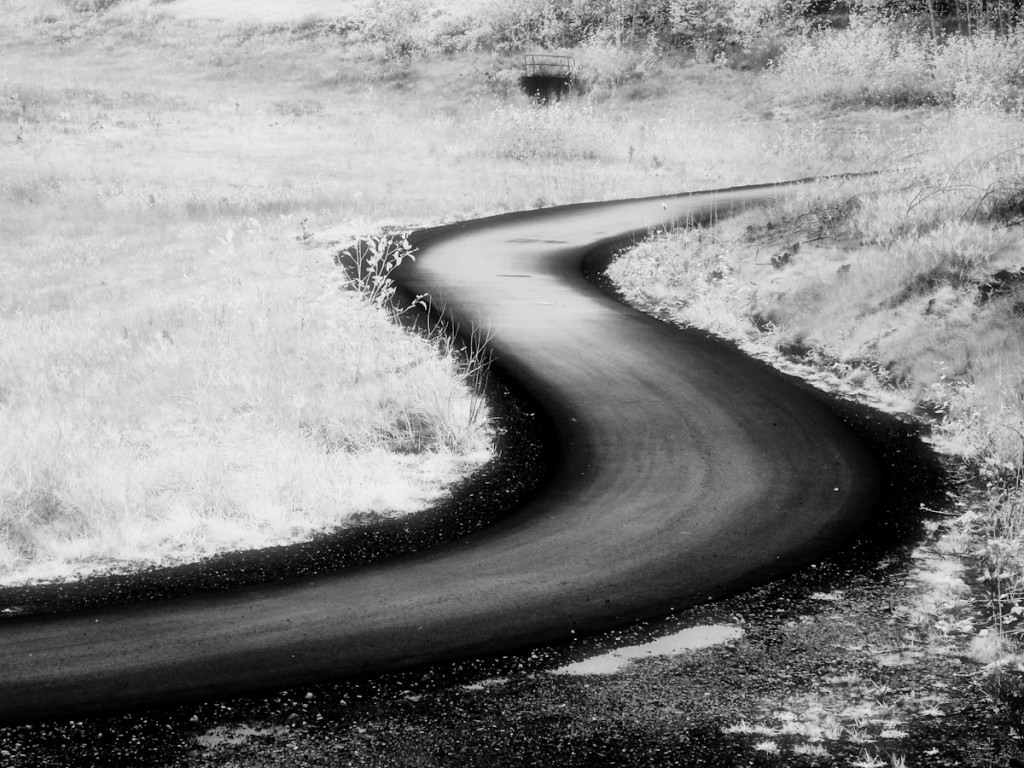
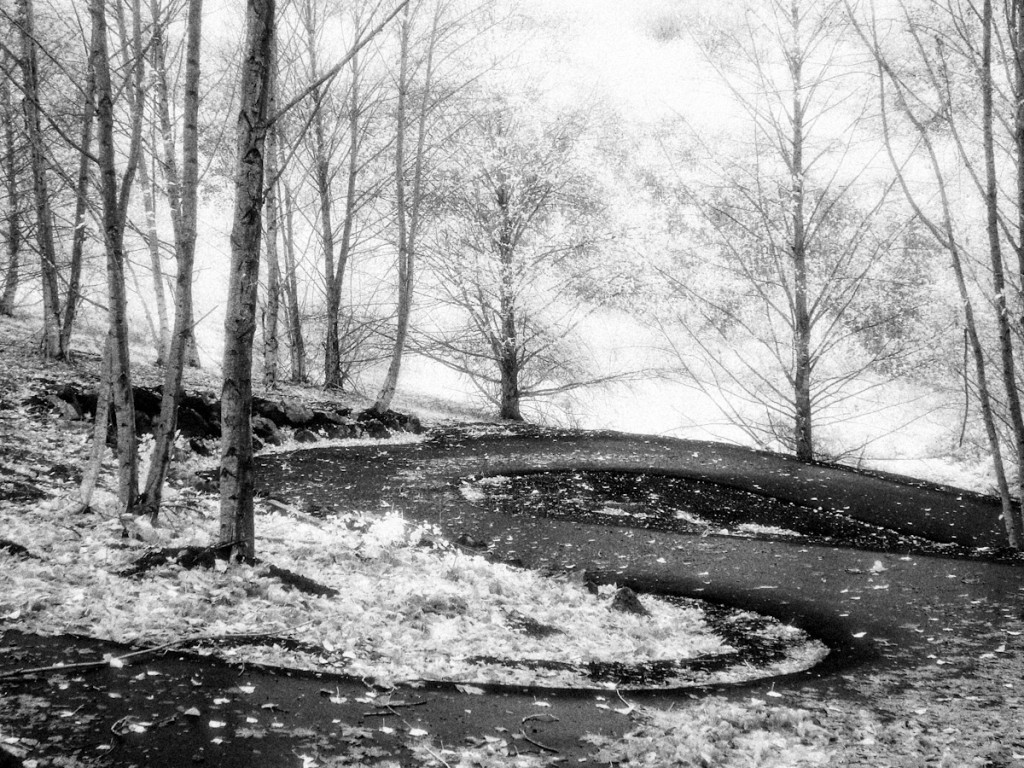
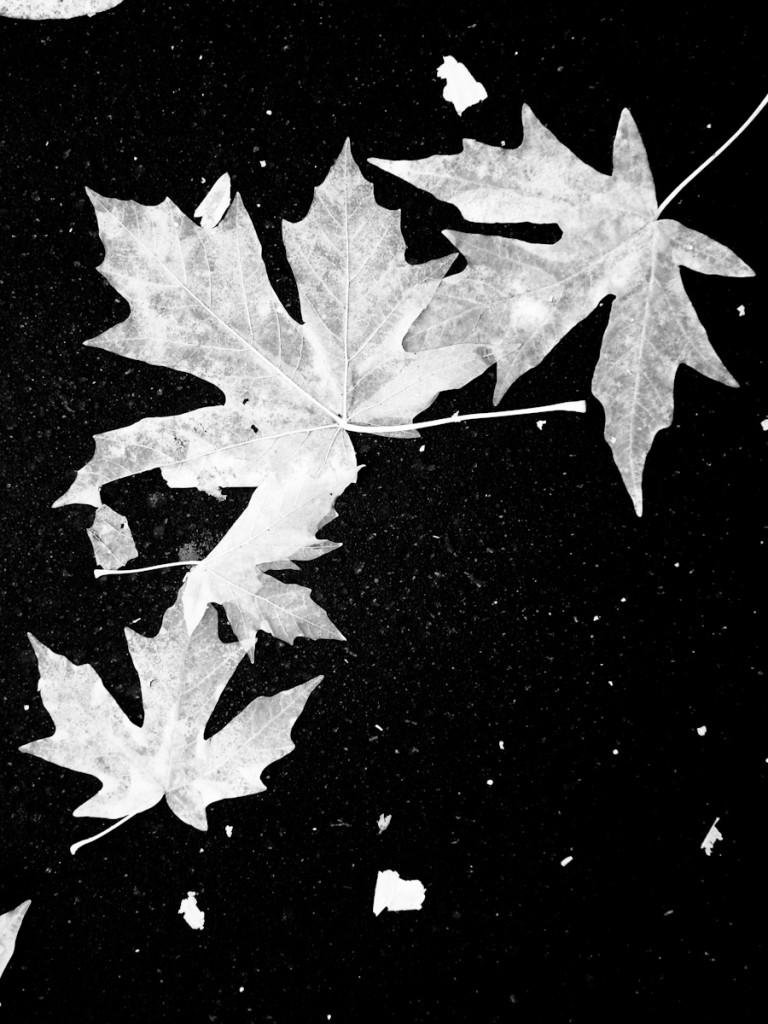
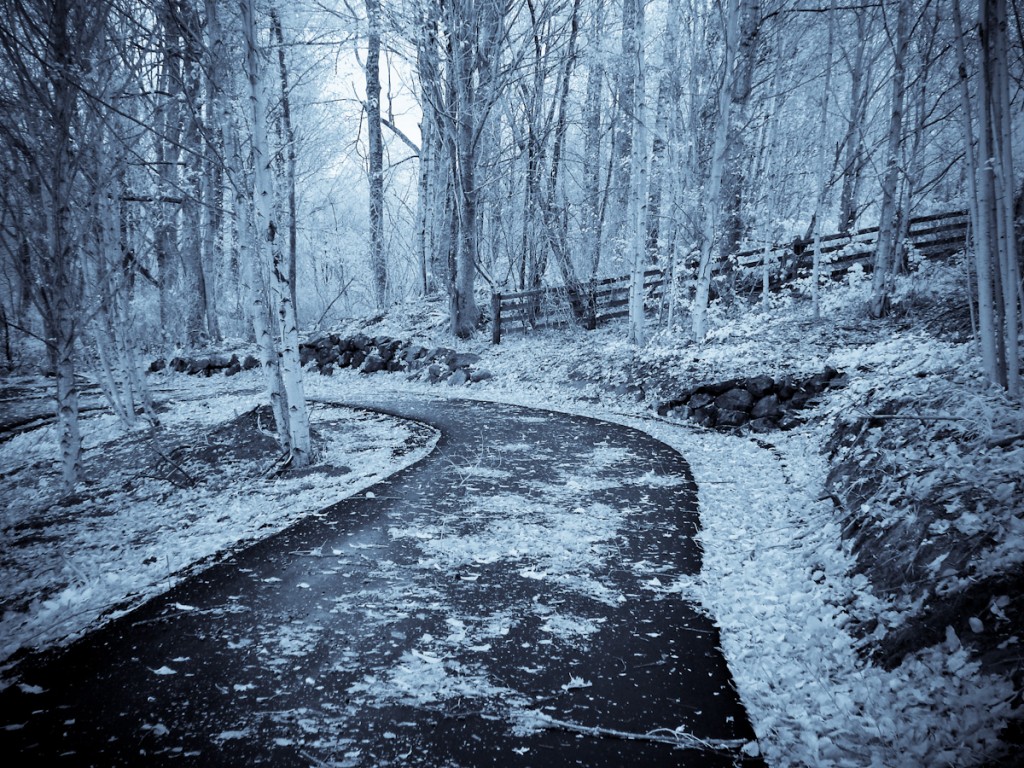
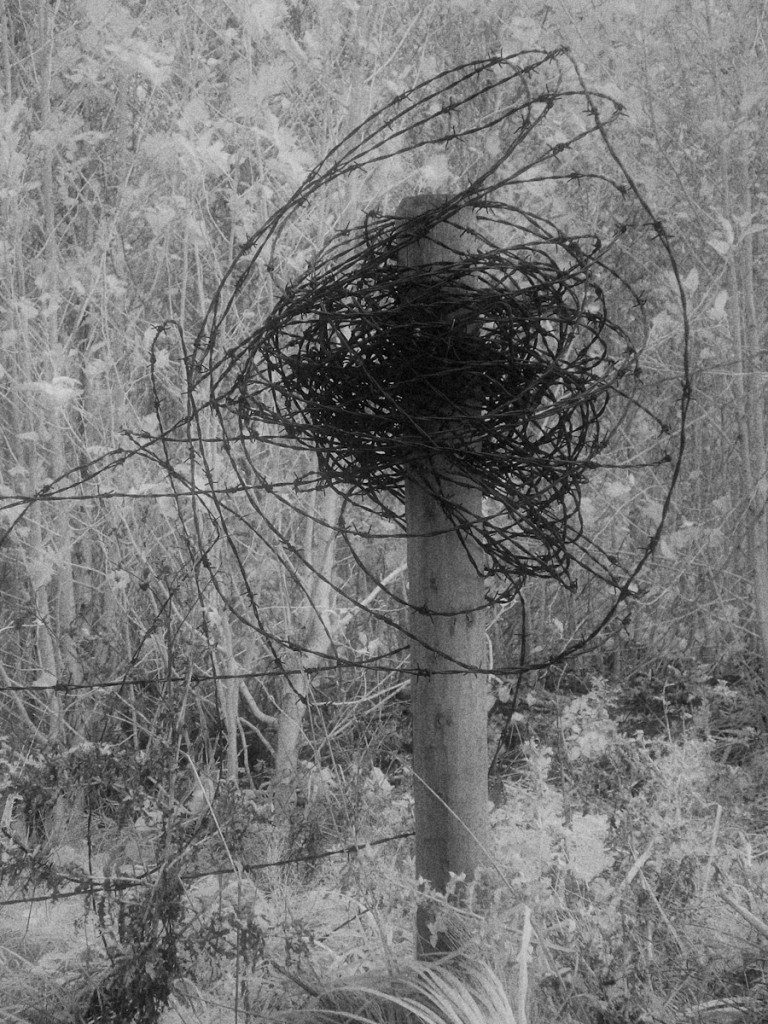
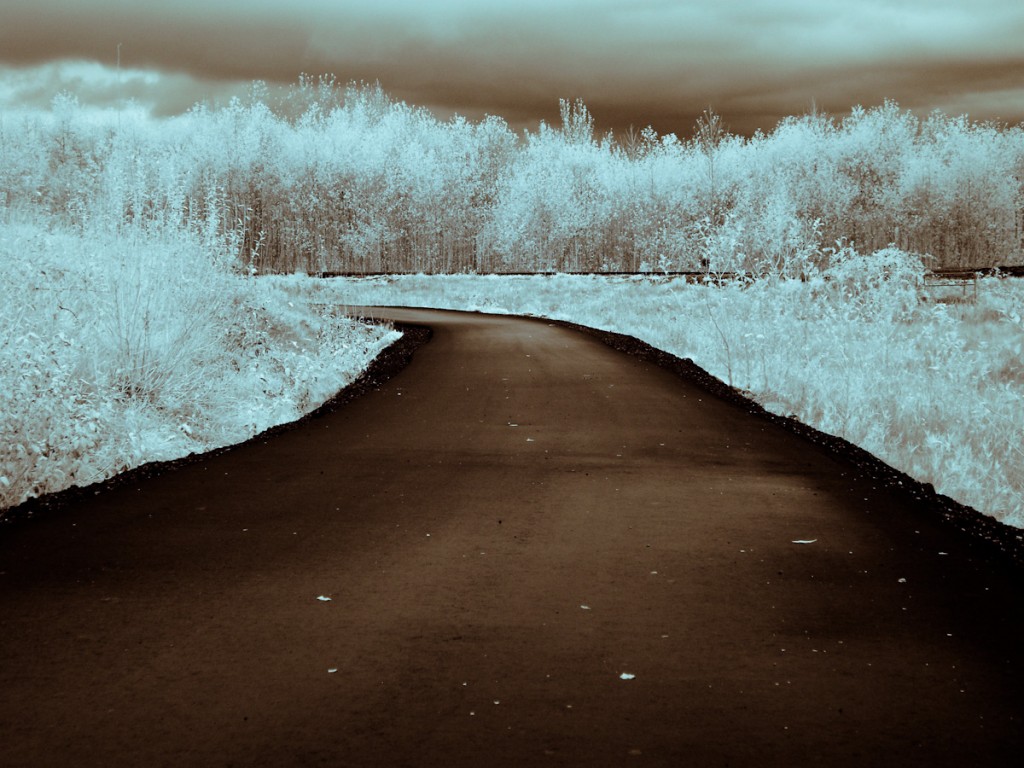
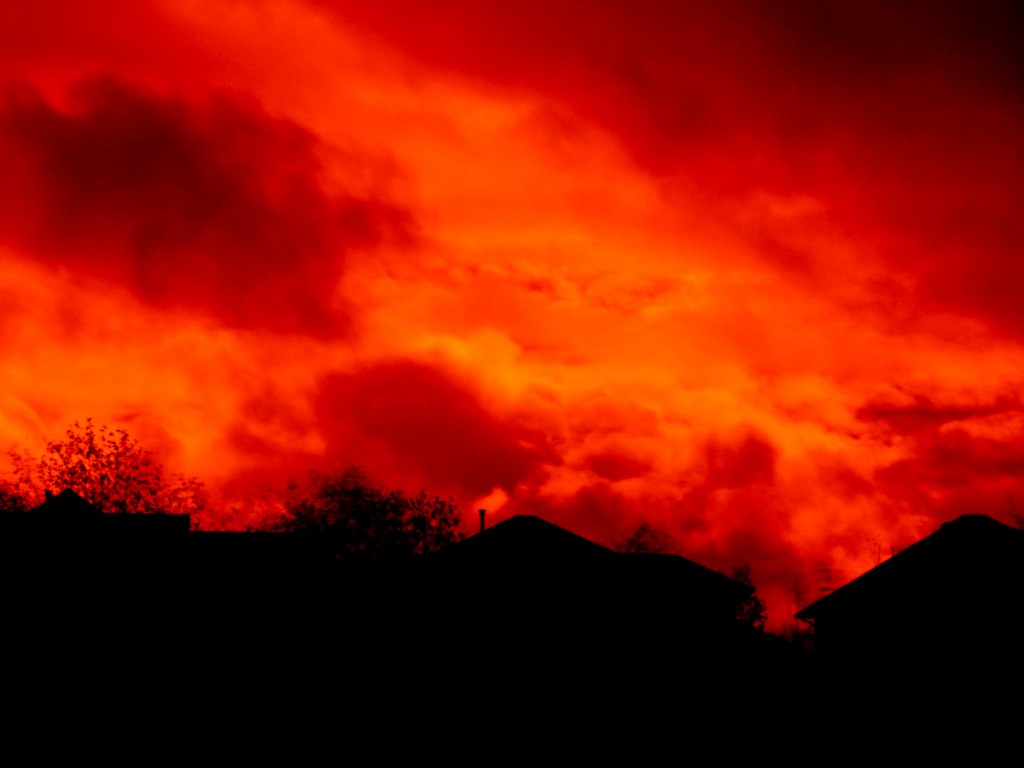
And This last image which came about when I pointed the camera at the huge furnace in the sky while not in nightshot mode.
1 comment | posted in Photography, Processing
Nov
7
2009
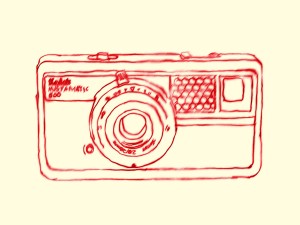
I’ve been using my graphics tablet mostly for photo editing but am now giving sketching with it a try. I can see that looking at the screen while drawing is very different from drawing on paper where the mark is created at the point you are looking at. My technique will need more work and as yet I haven’t found the settings which mimic a pen adequately.
no comments | posted in Cameras, Drawings
Nov
5
2009
Having recently received some B&W negatives from the lab, I started to think about other photo’s I’ve taken digitally and processed as B&W’s, either at the time of capture or when importing them through Lightroom. So I looked through the images from our trip in August and selected some of those. I feel that for these pictures colour adds nothing, everything that needs to be said is conveyed monochromatically.
no comments | posted in Photography
Nov
4
2009
Here are three recent additions to my growing impromptu photo series of boarded up windows and decaying structures. Why impromptu? I haven’t been seeking these images purposefully but do seem to be attracted to the look and mood they create.


 I distinctly like this last image which to me is like a minimalist painting, with the small patch of what is presumably whitewash, protected from erosion by some unknown sign that is no longer there. What did it say and for how long?
These were all shot with a Yashica T AF which has a Carl Zeiss Tessar 3.5/35 T* lens. I am very impressed with the sharpness and clarity of this lens but will need to do some more testing as the camera appears to not focus properly at infinity. However, considering I bought it and shot with it without even taking the price sticker off I will give it the benefit of doubt and shoot another roll.
no comments | posted in Composition, Photography
Oct
26
2009
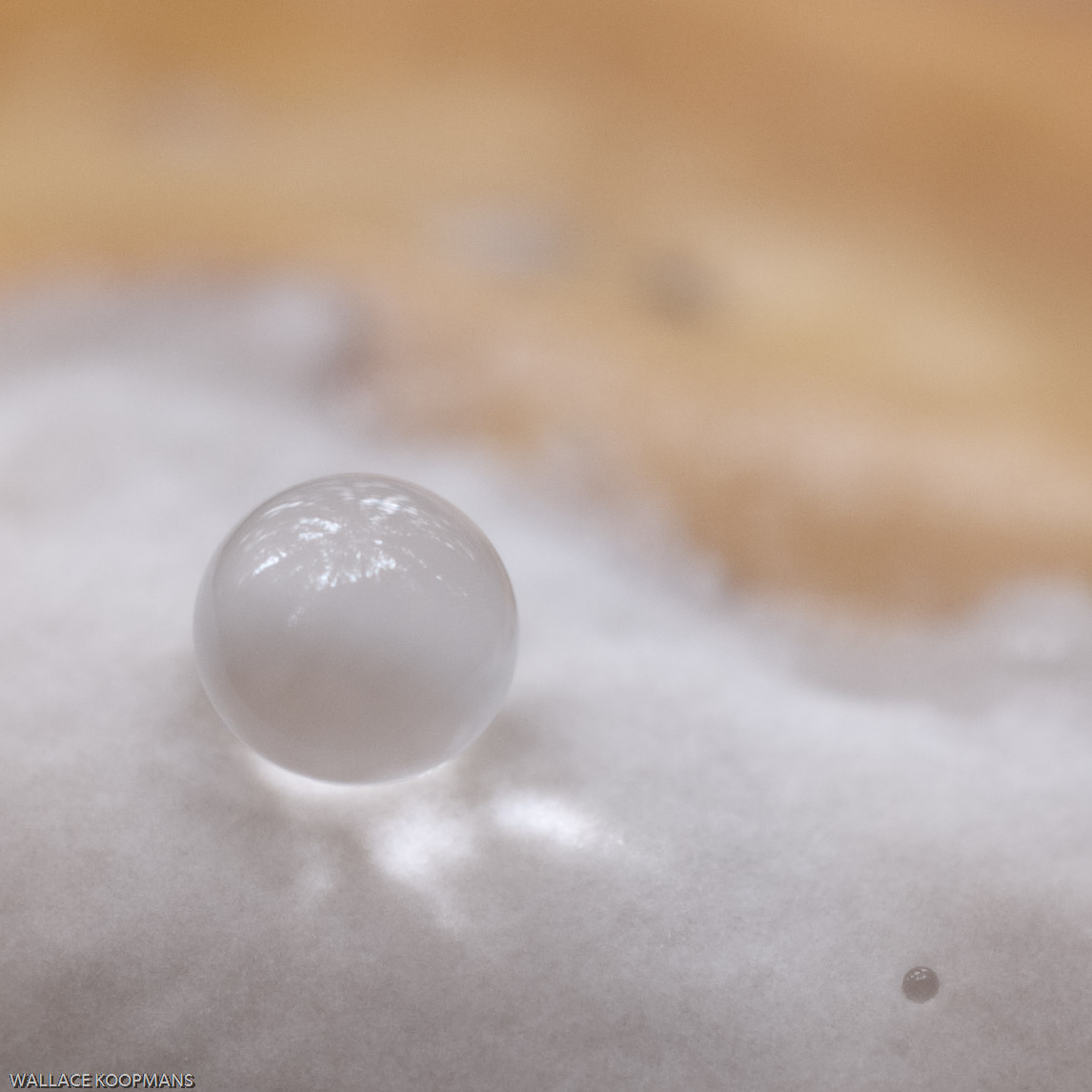
Not actually zero gravity but this sphere of water does appear to be defying that particular law. I went out taking pictures with my friend John and we came across a fungus with these droplets. Details (Pentax K-7, 35mm DA macro LTD 1 sec, f6.3 ISO 125 & mirror lockup)

1 comment | posted in Photography
Oct
22
2009
I just received these negatives back from the lab. This roll of fill has been in my Pentax Super Program for at least 6 months and only recently did I pick up this camera and finish the roll. You can see that I took some of these in parallel with my panoramic images earlier this month.
no comments | posted in Photography
Oct
21
2009
On Saturday Oct 10, 2009 there was a community photography project where participants would take photos on this day and upload them to Pentax Forums. I set out early in the hope that I would catch a beautiful sunrise but it was a little more like a whimper compared to the previous mornings roar.
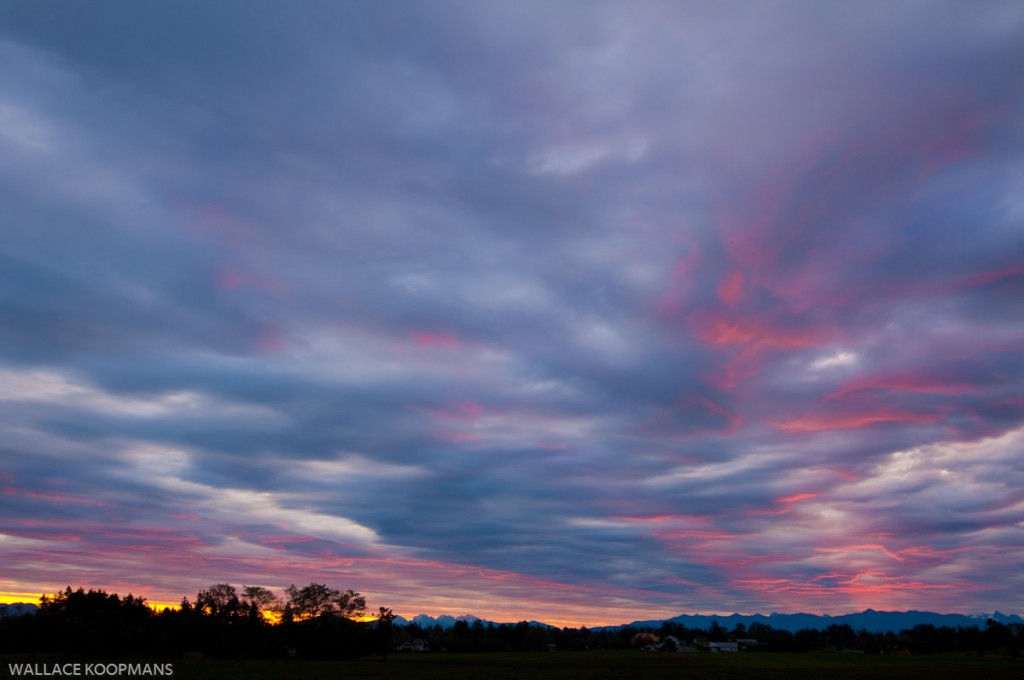
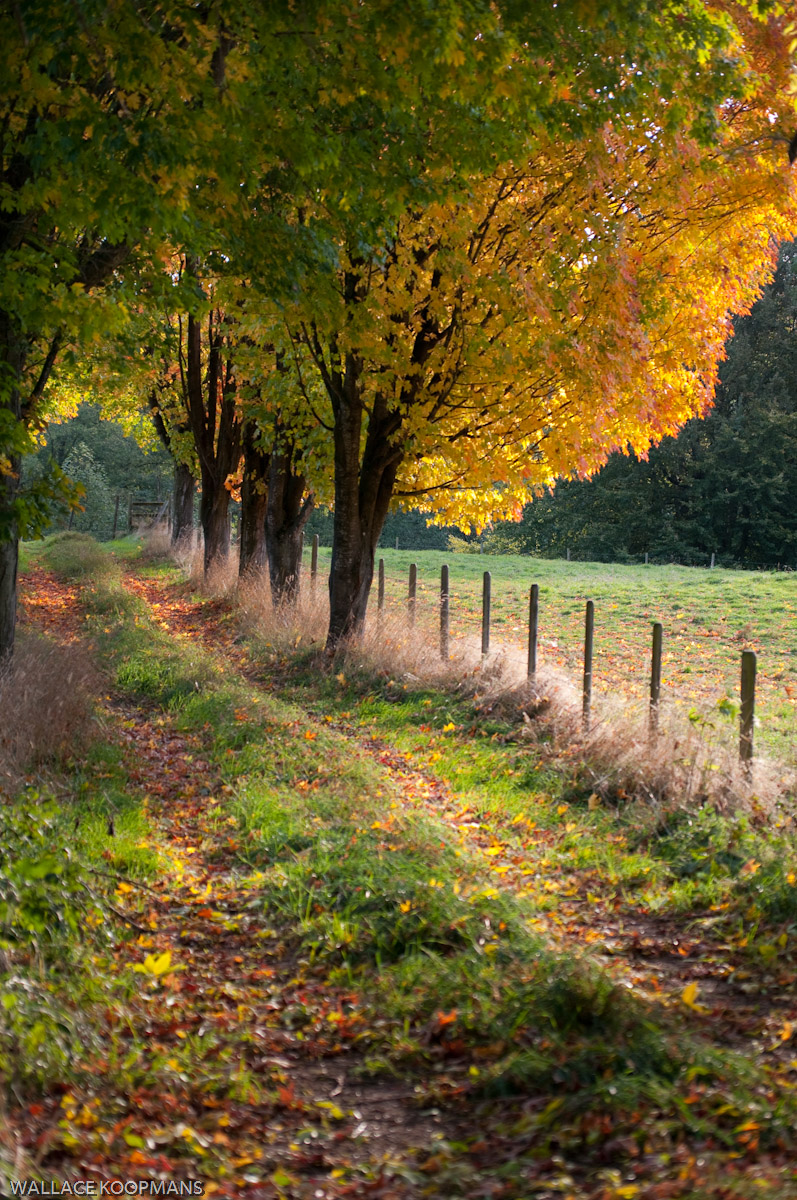 This last picture creates an interesting composition with the contrast of the dark and light and the lines leading into the picture. However it’s here where the picture falls down, in that it does not really have a compelling point of interest. I do like it though and may adapt it to a painting, perhaps with a figure along the path.
no comments | posted in Photography
Oct
17
2009
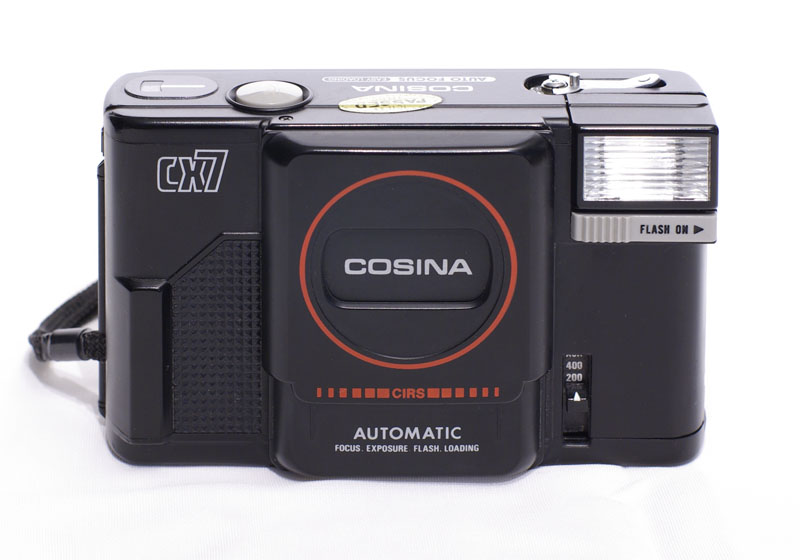 There is plenty of information on the Internet regarding the Cosina CX-2 or it’s copy the LOMO LC-A but there are other cameras in this series that came later. The CX7 came out in 1983 and is a very basic 35mm point and shoot without any manual overrides (well unless you want to change the film ASA setting to achieve +-1 stops with 200 ASA film. It has a lens design with 4 elements in three groups and an unusual focal length of 33mm and a maximum aperture of f3.5 (this is likely the same lens as the CX-1 as it has the same specifications). As far as operation there isn’t much to say, the film loads easily as it has a small sprung catch that hooks a film sprocket automatically and the film advances with a thumb wheel. The lens has a fair amount of vignetting and you really can’t say what f stop it has chosen so focus and depth of field are somewhat difficult to predict as shown by the picture of the Rubik’s cube. While it does have two LED indicators for short or far distance you can’t know how far or short that is, and it won’t be very short either as it’s minimum focus distance is 1.2M. So all in all it is an uncomplicated camera to use, with a decent lens but is best used when a little bit of randomness is welcome.
1 comment | tags: Cosina, CX-7, CX7 | posted in Cameras, Photography
Oct
8
2009

What is this? If you said a canvas or a blank canvas you are partially correct. If you said a blank canvas with a wide aspect ratio then we’re on the same page, so to speak. I bought several canvas’ with 2:1 aspect rations and need to get myself thinking outside the 4:3’ish box. So what better way than to do a little photography exercise. Fortunately I seem to have a camera for any occasion and so from my shelf I pulled what can only be described as a photographic anachronism, the Minolta Vectis S-1. What is it? It is an APS (advanced photo system) SLR camera with interchangeable lenses. If you recall APS is the small negative format film that digital has made effectively obsolete. What is unique about this camera and film though is that it provides for panoramic pictures. While not a true panoramic in the sense that the panoramic image is just the central area of the larger image it does mask the viewfinder giving you a 3:1 view. Now for the narrower thinking, you can’t walk around looking through a camera viewfinder, unless you want to fall and hurt yourself, so it becomes necessary to try and envision how the world around you looks in this “narrow” view. Here is where the expanded vision begins, as you look around you will see new compositions and inter relations between objects that don’t work in the normal smaller box we are accustomed to. Lines that enter the frame in unfamiliar ways, new points of interest, it is an opportunity to explore and see things in a different way.
If you want to see the images in their original aspect ratio, you will need to click on them individually. An interesting side effect of the square thumbnails is that it’s apparent that several of these images work well as squares, possibly even better. But I will let you be the judge of that.
no comments | tags: composition, Photography | posted in Composition, Photography


