Jun
18
2011
Samples – Here are some sample images shot with the two cameras as well as with the Pentax K-7. With the K-7 I used the FA 28-70 f4 lens at the 28mm focal length which equates to about 42mm in terms of 35mm film. I could have used the SMC A 28mm but I wanted to have other focal lengths available when I wasn’t taking test shots.
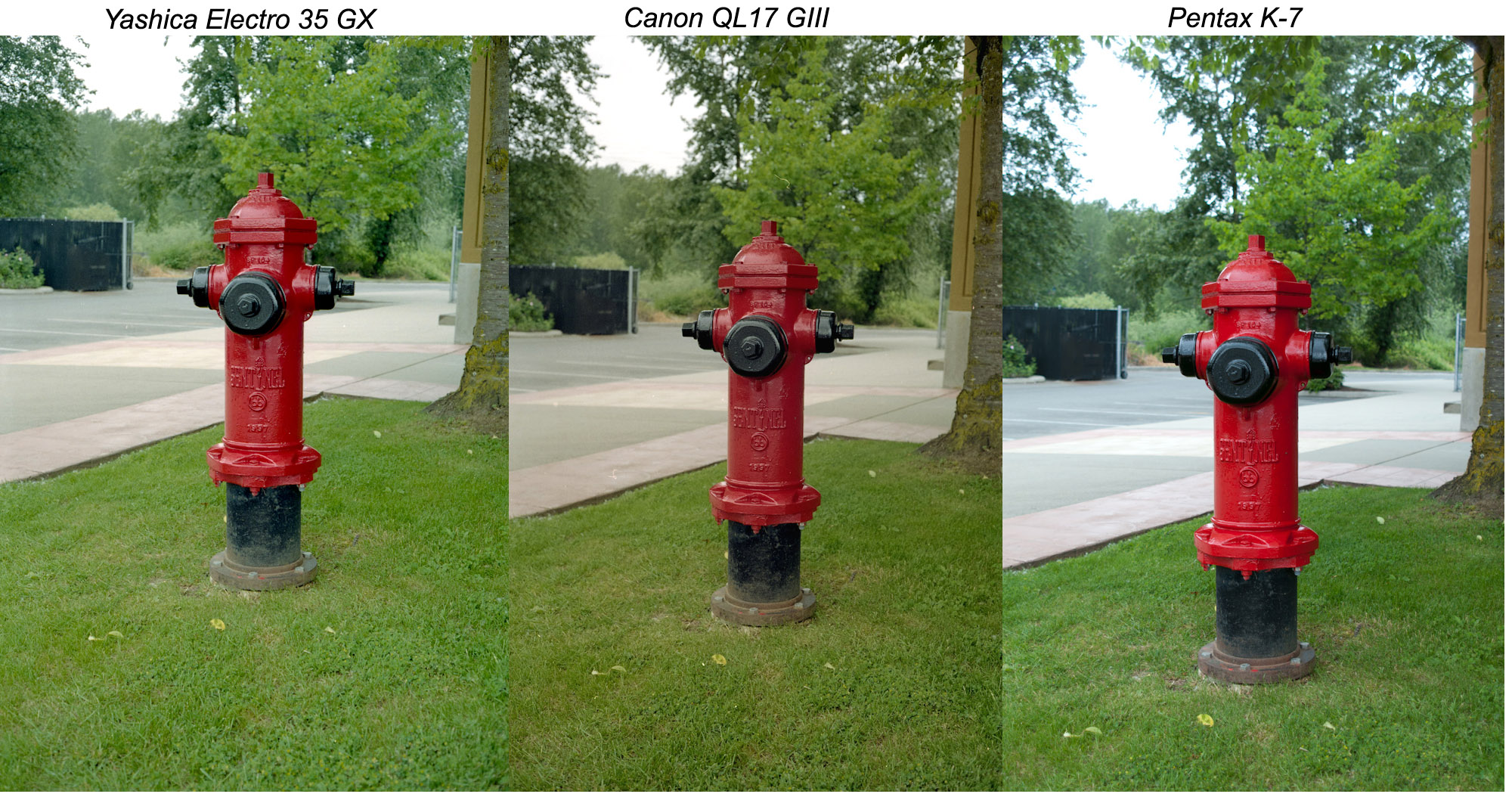
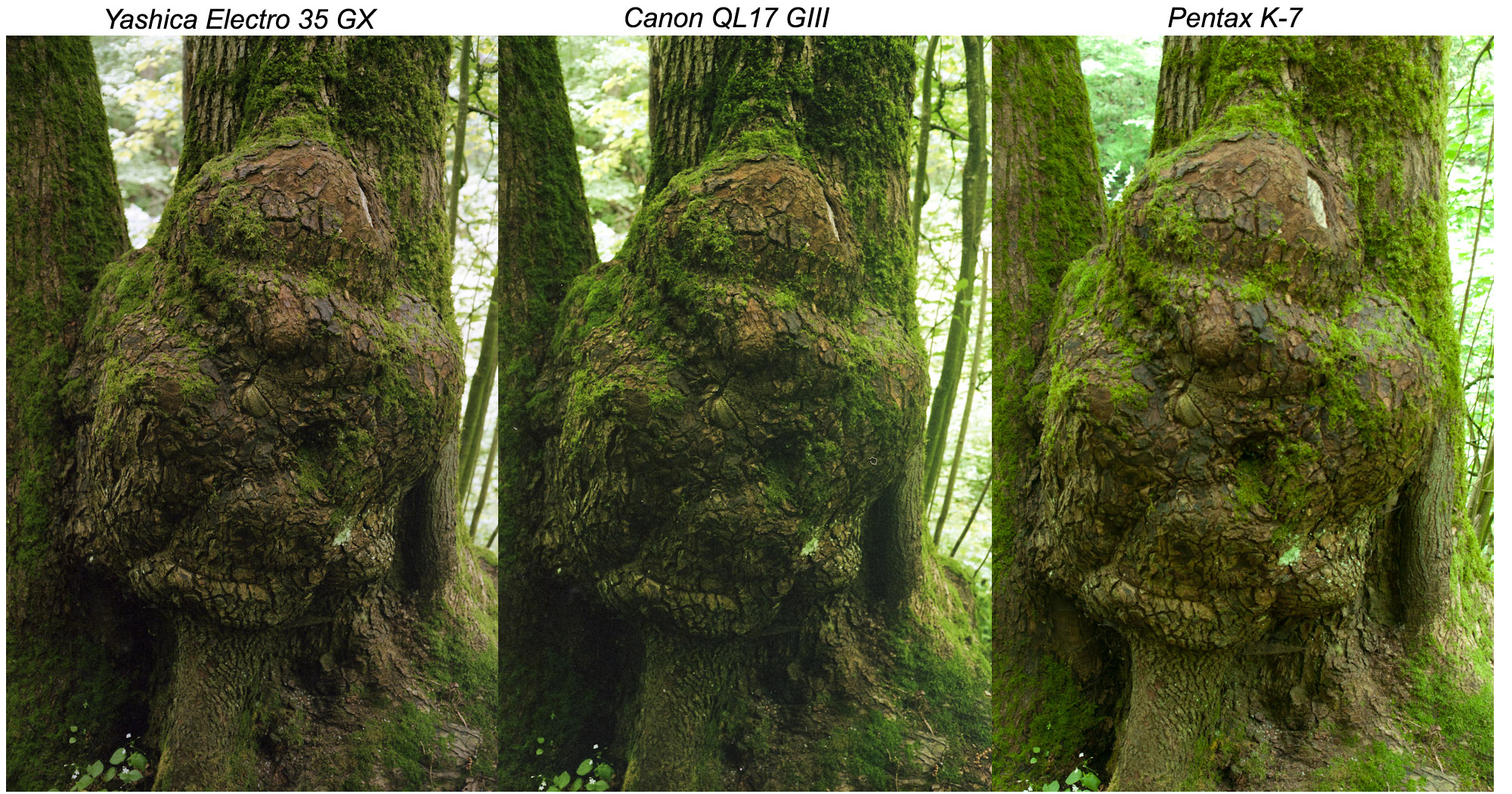
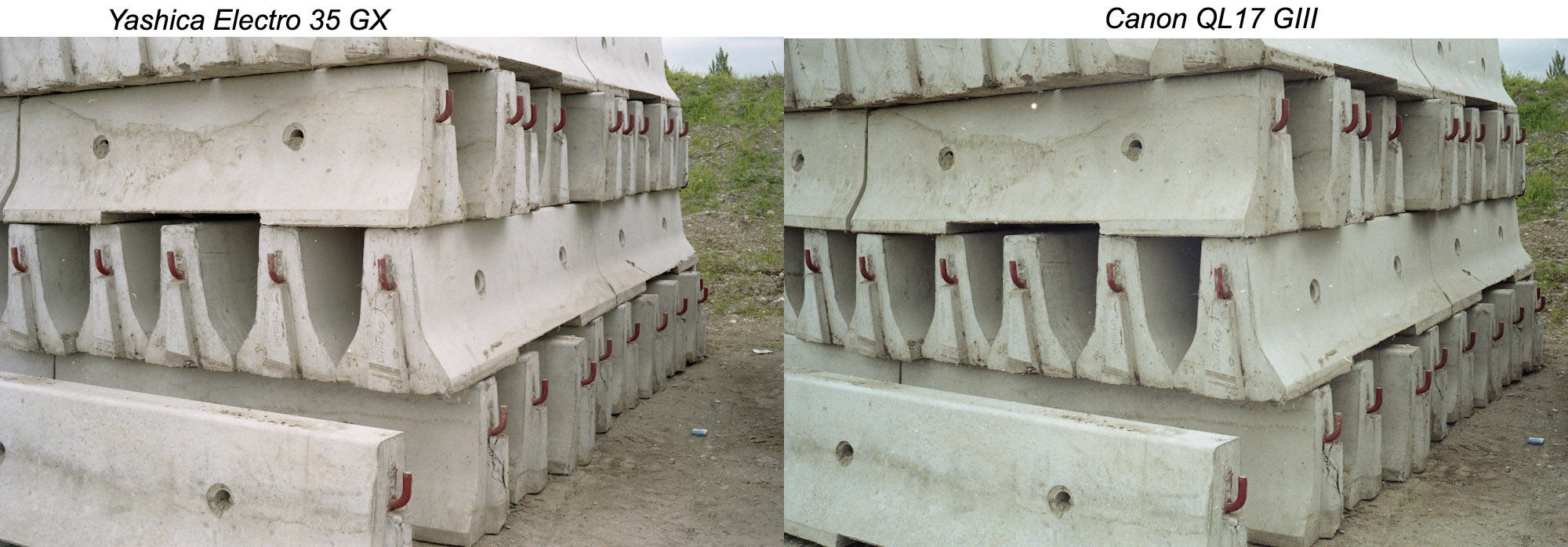
So what did I find. Well they are very close in output, so much so that more difference occurs during scanning and editing than from the actual image capture. However the Yashica did seem to get the exposure better in more cases resulting in cleaner negatives with less grain after processing. This could simply be down to the specific cameras and batteries I have though as the cameras are now undeniably old. So which one would I pick? Well I do really like the ability to shoot manually with the Canon and I do like the flexibility of the shutter on the Yashica, so I have to give them both a place on the shelf. I will definitely be trying some better film in the Yashica and it’s rarity makes it a conversation piece. I have to say that even though I used cheap Kodak 200 I was pleased with the look of the images. It takes some work to get the digital files to have a similar look because not all the differences between colours are equal. I didn’t in this case make any changes to the digital files just for the comparisons.
Part Two Part One
4 comments | tags: camera, Canon, Yashica | posted in Cameras, Photography
Jun
17
2011
Operation and handling
While these cameras where state of the art in their day, compared to a modern digital camera they are extremely simple devices. The Canon uses a electro mechanical system to set the aperture. It is a simple galvanometer needle that’s position is trapped when the shutter is pressed, this is then translated into an aperture through a linkage. I found that the metering is very susceptible to underexposure due to back lighting. With the Yashica you set the aperture and the camera sets the timing of the shutter, where one of the variables in the circuit is how much light is falling on the silicon sensor. Beyond that they really are a lens and a system of moving the film forward. A small but noticeable difference is in the film advance lever. The Canon requires a longer throw of the lever while the Yashica advance is just a small flick of the thumb. I much prefer the Yashica in this respect. On the other hand the focus control on the Canon is superior, it includes a knob off to the left that makes focus adjustments effortless. The Yashica’s focus however is adjusted with rubber patches around the lens barrel near to the camera body and I find that I almost have to reach around the camera to change it making it difficult to focus and shoot without a slight hand position change. Update: A change in how I hold the camera, with my left hand underneath, has made them about equal for focusing.
Both camera’s are rangefinders with focus patches but they appear very different in operation. The Canon is more subtle with it’s square focus patch not impinging on the scene through the viewfinder. The Yashica has a very contrasty diamond shaped patch that I find too intrusive but slightly easier to confirm focus with. The Canon viewfinder is much brighter than the Yashica’s but they both have frame lines that adjust for parallax error. They also have the exact same magnification, I verified this by holding them to my eyes at the same time, An interesting effect of doing this is that you can see in 3D despite looking through them, a not interesting effect is that this can make you feel queasy.
So all that remains is to get my negatives back and do a comparison. I do have a sense that the Canon metering was off in some circumstances as it seemed to be selecting too small an aperture for the conditions. This isn’t normally a large problem though as under other conditions I would use this camera in full manual mode, which is not an option for the Yashica.
Part one
6 comments | tags: camera, Canon, film, Yashica | posted in Cameras
Jun
16
2011
The Fraser Valley 2011 Biennale opening recieption is tonight. I’m excited to see all the different art that will be there and also honoured to have one of my paintings in the show.

A juried exhibition celebrating regional visual art.
The Great Hall
June 16 – October 9, 2011
32388 Veterans Way
Abbotsford, BC
no comments | posted in Art observations
Jun
15
2011

Four exposures on one Polaroid Spectra film. Playing on the trampoline
2 comments | tags: Photography, polaroid | posted in Photography, Processing
Jun
13
2011
Finally the answer everyone has been waiting 35 years to have. Which is better the Canon Ql17 GIII or the Yashica Electro 35 GX? Really no one, just me?
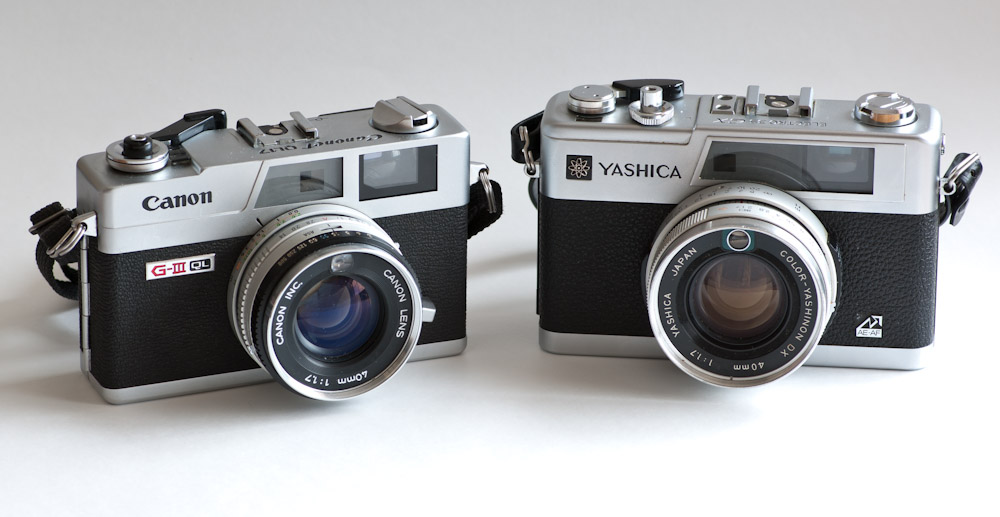
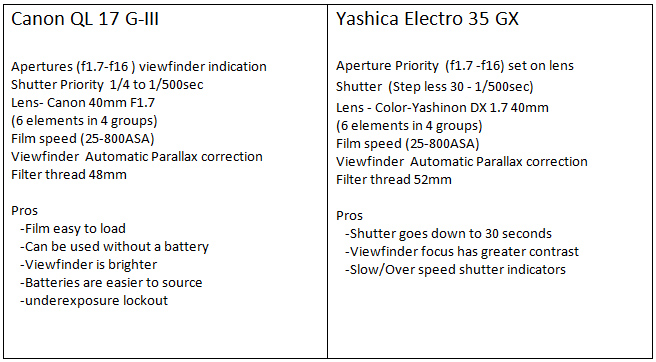
So you can see that they are very similarly specified with the greatest difference being that the Canon is Shutter priority and the Yashica is aperture priority. The next phase of testing will be to run some film through each of them. As I can’t determine precisely the shutter speed or aperature for each of them I may not record any info but just take matching pictures.
5 comments | tags: Cameras, Canon, film, Yashica | posted in Cameras, Photography
Jun
11
2011

The latest painting in the series. I suppose I should give the series an actual name. Until then it continues to be an exercise in expanding small elements of cameras beyond what the un-aided eye can see. By isolating these details the paintings express different ideas that would not otherwise be exposed.
no comments | tags: Leica, Painting | posted in Painting
Jun
9
2011
I guess this was someones idea of golden lions. Taken with the Canon Ql17.

no comments | tags: Canon, film, Photography | posted in Cameras, Photography
Jun
8
2011

Maybe one day my art can warrant a crate, but for now cardboard will suffice.
1 comment | tags: crate, gallery | posted in Drawings
Jun
7
2011

I thought it would be fun to take pictures of the concrete lions I came across. The fun didn’t last too long as there really is a limited number of forms. Sometimes an idea runs into a dead end but it’s in the effort that new discoveries can be made.
1 comment | tags: lions, Photography | posted in Composition, Photography
Jun
6
2011
Dunach elementary in Abbotsford, a rural school with a long history, is scheduled to be closed down this year. These two images represent small instants of the larger times and changes that occur to a building like this and by extension communities.

Here is a different take, where I have literally placed Dunach Elementary on the proverbial chopping block. Trite, but if you don’t know what is then how can you produce art that isn’t.

no comments | tags: Dunach, Photography | posted in Composition, Photography

