Oct
22
2012

Well more than a year after it’s initial release I bought a Pentax Q. Partly because of the drop in price and partly because with the release of the Q10 Pentax has shown that they intend to support this lens mount further. This is an interesting camera and many of the reviews of it focus heavily on it’s sensor size. My initial testing of it when it was released and early use of my own has shown that it out performs 35mm film in almost all cases except achieving shallow depth of field. That’s the yard stick I’m comparing it to and I shoot plenty of film and am not unhappy with that. If cameras are tools, and they are, then having the right tool for a job is important. If the job is to have a fast adjustable tiny unobtrusive camera than this is that hammer. The other thing that I plan to use this camera for that would otherwise be difficult and expensive is as a super telephoto. To achieve this I plan to use a K to Q mount adapter with my 100mm macro giving me a 550mm equivalent focal length. For now though I am enjoying using the 8.5mm 1:1.9 lens (47mm equivalent in terms of 35mm film) that came with it. I am playing around learning the camera and the files it creates so these are a mix from Lightroom and an iPad. The ones from the iPad don’t have any lens corrections and are perhaps over done, Lightroom is far better for getting natural results.
I have more images ready but I will post them separately.
2 comments | tags: camera, Pentax Q | posted in Cameras, Photography
Oct
21
2012
A long post title but discriptive which makes me wonder if I really need to say anymore.
2 comments | tags: BW, Digital | posted in Cameras, Photography, Processing
Oct
19
2012
Back to the USSR, specifically the Lubitel 2 that was made in the U.S.S.R. This is the TLR with what I have described as the worlds worst viewfinder.

no comments | tags: film, Lubitel, Russian | posted in Cameras, Photography
Oct
17
2012
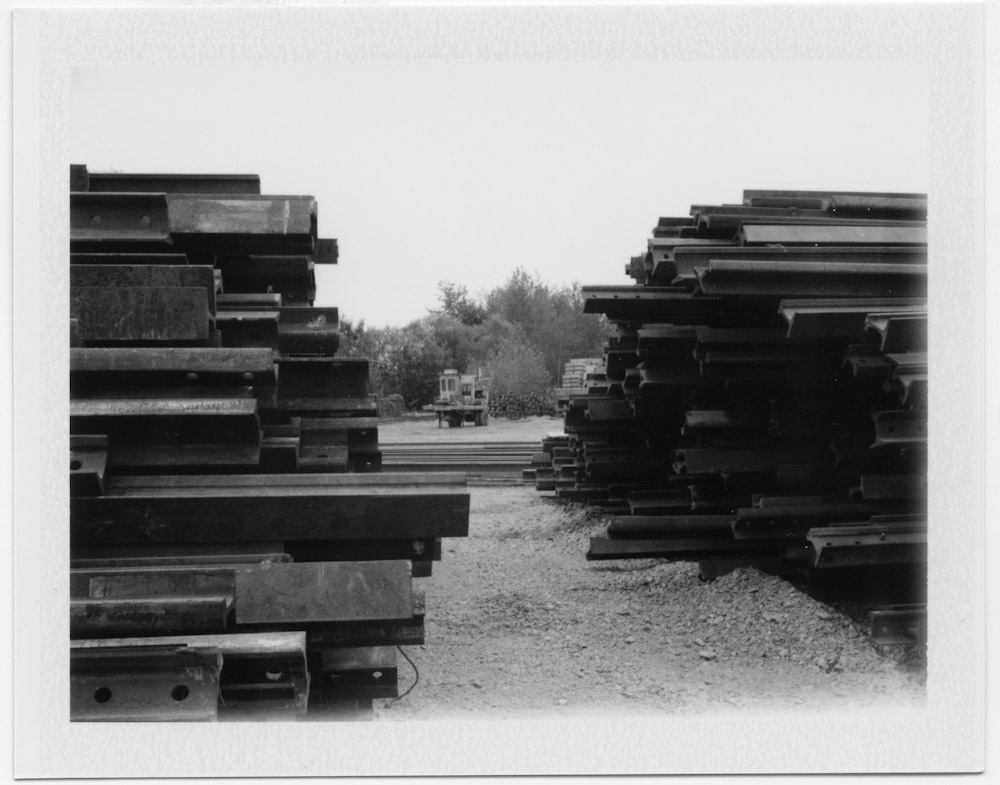
After finishing the pack of Fuji Fp100C in my Polaroid pack film camera I loaded it with Fuji FP3000B and I am smitten. While I enjoyed the results from the colour film I haven’t been completely sold on it. There is a coolness to the colour and the image clarity is not spectacular. With this faster black and white film (3000 ISO) though the camera is stopped down considerably allowing the lens to perform better. It just seems to be the right film for the camera and the era, you expect a black and white print to come out of this camera.
1 comment | tags: BW, Fuji, instant, polaroid | posted in Photography, Processing
Oct
15
2012
1 comment | tags: iPad, Painting | posted in Painting
Oct
12
2012
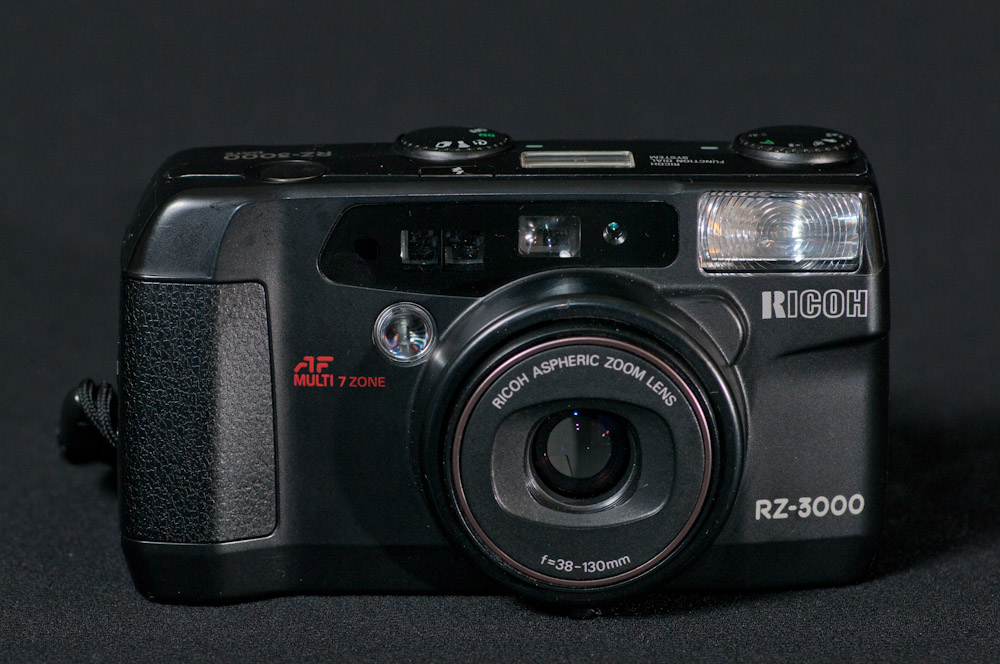
The Ricoh RZ3000 may be the best form factor for a film zoom point and shoot camera. While it is a larger than the Canon 180u or any of the Olympus Stylus cameras, it feels good in the hand. It has a nice grip on the right side that makes carrying it in your hand easy. The other reason is the top plate dials for changing modes, most of the other cameras like this have small rubber buttons that are hard to press accurately and only provide feedback via an LCD. With the dials the available exposure modes can be easily set and the large flash control button is separate and distinct. Another nice feature of the dials is the selected mode is illuminated with a pleasing glow making it easy to know how the camera is set when in dim light.
The lens is a 38 to 130mm f4.5 to 9.5 with aspherical elements (6 elements in 3 groups)
Ricoh describes the auto-focus as having 7 zones with 1024 steps. The camera also has an infinity mode selected via the top dial and a single center focus point mode. Other modes are portrait where the camera sets the flash to fire for fill and sets single focus point automatically. The zoom also automatically changes to frame the person with a half press of the shutter. Action mode sets auto-focus to single point and the drive mode to continuous.
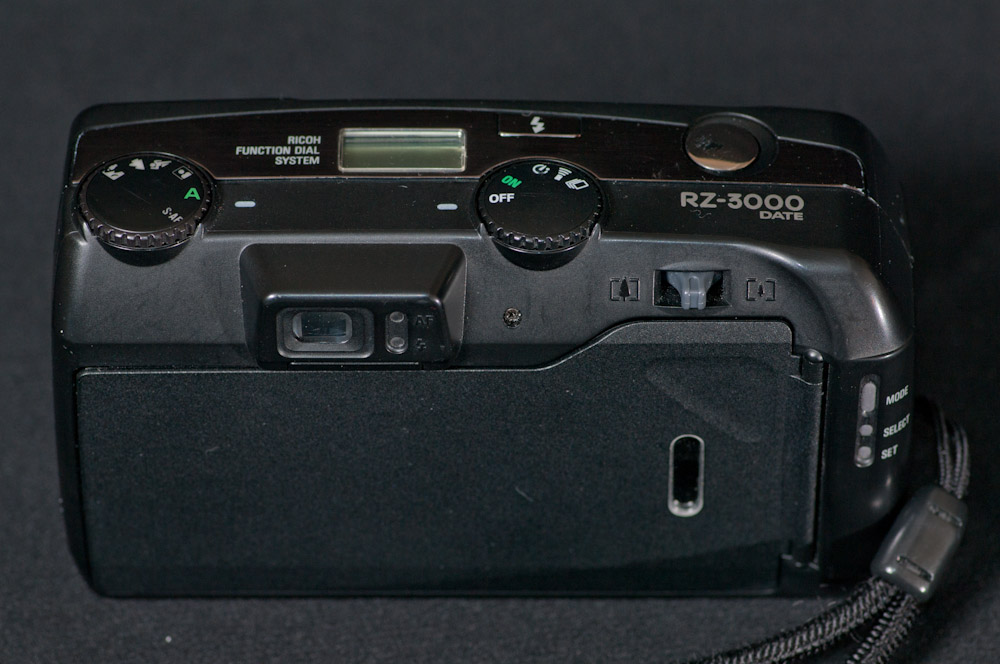
The major detraction is the lack of any exposure overrides, all exposure is handled by the camera. I have only run one roll of film through the camera and it was some very poor Polaroid 400 that was at least 10 years out of date. The point was to test that it worked before committing to using good film that is becoming even more precious.
I’m intrigued enough with this camera to give it another try with better film. Until then here are some sample images from that initial roll.
8 comments
Oct
10
2012
Placing distortion inducing optical elements in front of expensive cameras is all the rage these days and all the hipsters are doing it so I didn’t want to miss out. There is a line of products called Lensbaby that allows for selective focus by essentially tilting the front element. My setup is a little different I’ve taken a wide angle adapter intended for video and mounted it on the front of the lens. This isn’t so much selective focus as the worlds worst astigmatism. The camera I’ve victimized is an interesting one. It’s actually a point and shoot SLR with a prism finder and a fixed 41mm 1:2.8 lens. Take a moment to think about that as I wind the next frame with the thumb wheel. Yes SLR, Yes thumb-wheel, fixed lens, No the mirror actually performs as the shutter, so many questions. The mirror/shutter has a single speed and you select the aperature via a ring around the base of the lens. To use the meter you press the little green button on the top plate near the shutter button. Three LED’s let you know if you are under, over exposed or just right(ish).

Back to the wide angle adapter it has a magnification of .55 which multiplied against the lenses 41mm yields 22.5mm of wide-angle badness. Of course I didn’t use it for all the shots see if you can tell which ones.
no comments | tags: camera, film, lens | posted in Cameras, Photography
Oct
9
2012

The Minolta Himatic 7s is another light tight box with a lens. It’s a bit heavy and quite noisy compared to similar cameras but the Rokkor 45mm 1:1.8 lens is a good performer. It does have the option of completely automatic exposure but I like to use it in manual mode performing the light metering with a digital camera. You might be wondering if I’m already using a camera to take light measurements why not be done with it and give up film. The simple answer is I like using these camera and framing and composing with the optical finder. I also don’t meter every scene but get a good estimate of the light and adjust from there which isn’t so different from using an external light meter I’m just getting a test shot too. I mentioned at the start about how noisy it is and it’s true of almost every operation of the camera from cocking the shutter to the release of it. It has a very sharp metalic sound, everyone and thing around you is going to know you just took a picture.
2 comments | tags: camera, film, Fuji | posted in Cameras, Photography
Oct
7
2012
I have no idea where I’m at with my Polaroid a week series.

2 comments | tags: film, polaroid | posted in Photography
Oct
5
2012
With all the film posts I do you might think I don’t shoot digital, but I do and here are a few recent ones from my Nikon P7000.
2 comments | posted in Photography