Sep
19
2013
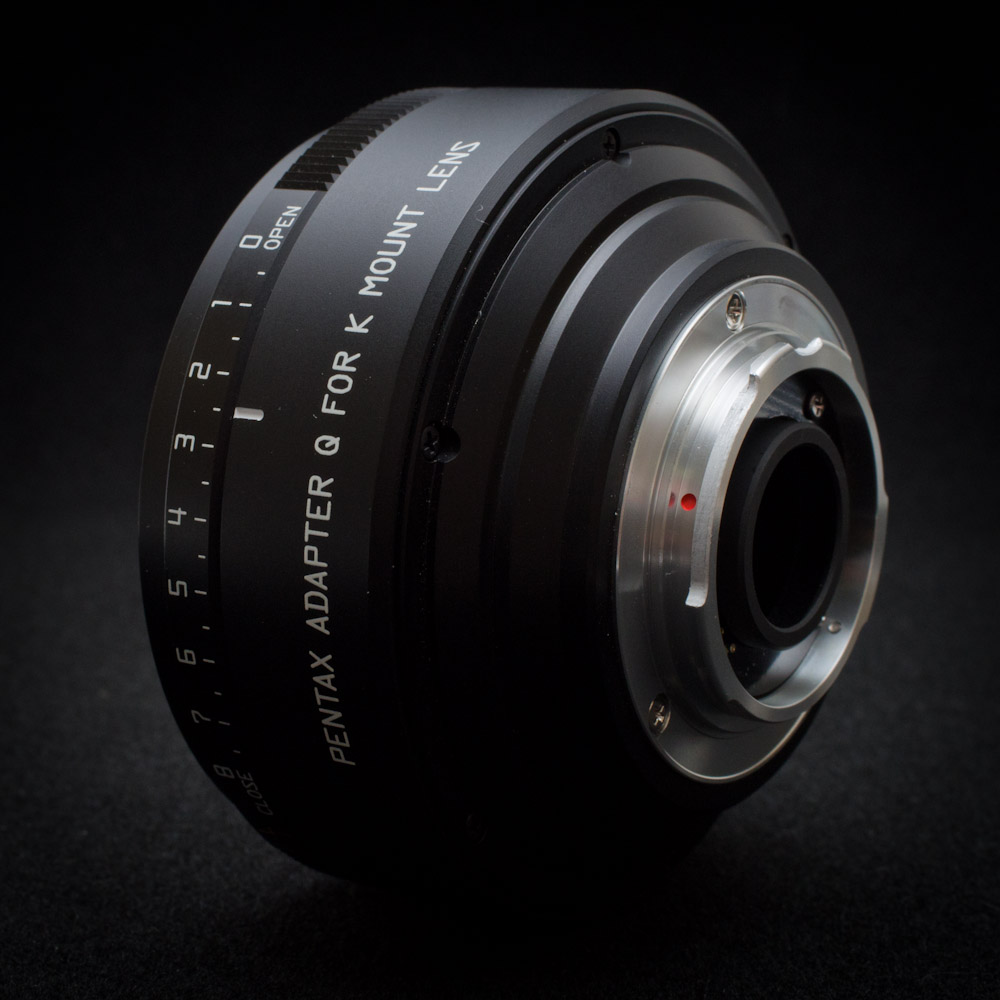
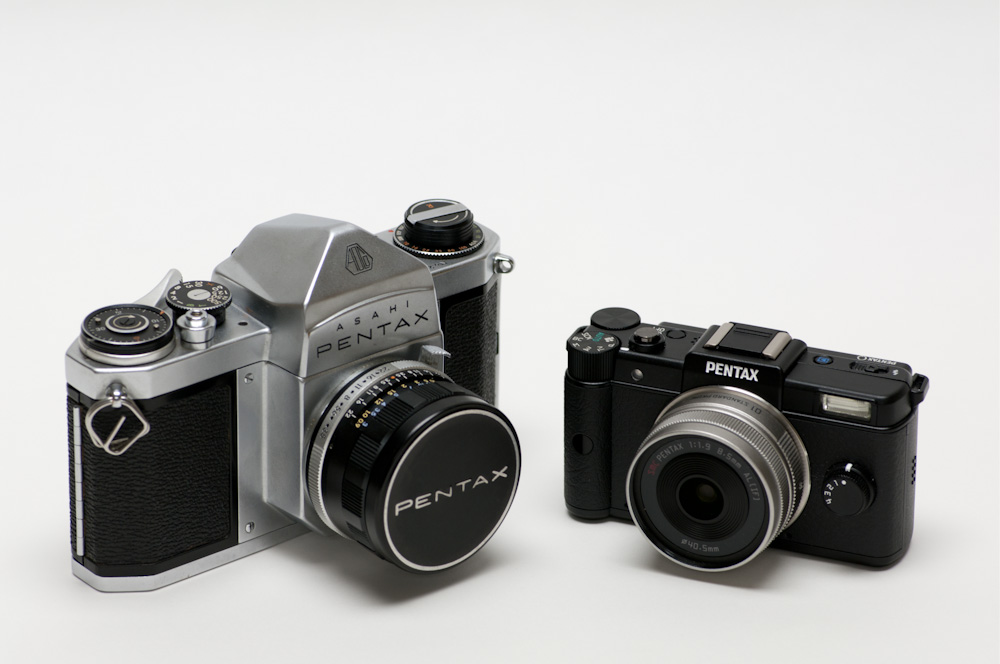
The addition of the Q to K-mount adapter adds quite a bit of functionality to this Pentax system. Like many people I have a hard time pinning down what the Pentax Q cameras are supposed to by, maybe it’s easier to say what they are not. They are not a replacement for a DSLR and they are not necessarily a replacement for a point and shoot. Yet they can do a bit of both and more. With the adapter the Q does something neither of the others can and that is to provide a fast and extreme telephoto in a tiny package. As an owner of Pentax lenses it becomes an inexpensive extension of what I already have. If you toss in the 03 fish eye then it makes it even more versatile and unique system.
More Pentax Q adapter posts Pentax Q K-mount adapter Pentax Adapter Q for K Mount
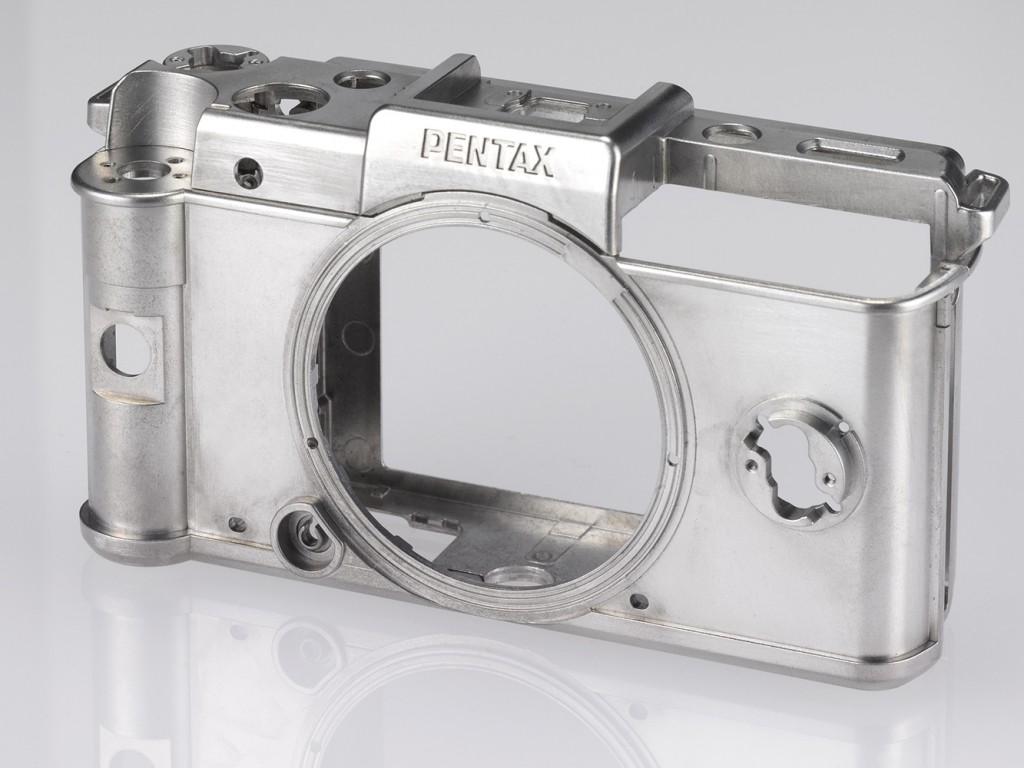
While the latest Pentax camera in this line the Q7 is available in many different colours I really like the original Q in black. It is so well-built and does not look like a toy despite how tiny it is.
4 comments | tags: Digital, Pentax | posted in Cameras, Photography
Sep
17
2013
3 comments | posted in Painting
Sep
15
2013
This is a mix of images from either the Canon G2 or the Canon Sure Shot Classic 120. I compared the two cameras outputs in Digital vs Film 2001 edition. I cropped the film images to match the aspect ratio of the digital cameras 1.333x 1 to make distinguishing the two a little harder. At these sizes it’s not always obvious which is which. I did my first exploration for the difference between film and digital in a post here The battle of 2001 and came to a similar conclusion so I will move forward in time next to see if I can find that illusive moment when digital photography exceeded film in its abilities for the average photographer free of all the marketing.
1 comment | tags: Canon, Digital, film | posted in Photography, Processing
Sep
12
2013
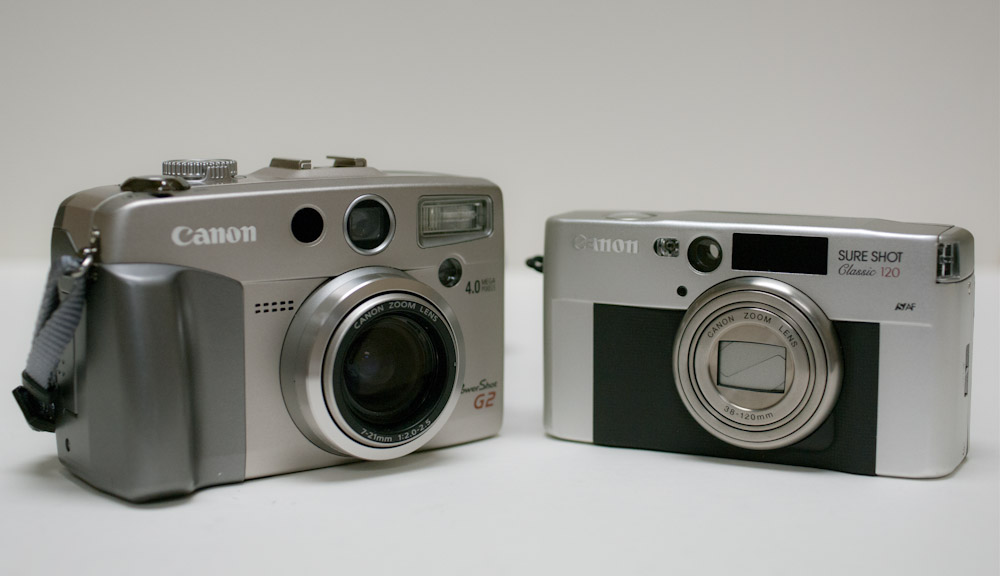
Previously I looked for the point at which digital image capture exceeded film for the average snap shot Film vs Digital the battle of 2001. This time around I’ve chosen two different cameras available in 2001 both higher quality and with zoom lenses.
The two cameras are the 4.1 Mpixel Canon G2 with its 1/1.8″ CCD sensor and 34-102mm (35mm equivalent) f2.0 – F8.0 lens against films Canon Sure Shot Classic 120 and its 7 element super Spectra coated f4.5 -f10.9 lens using Kodak Ektar 100. I shot the Canon G2 set at 100 ISO through out.
The Sure Shot Classic 120 was released in 1999 and the Canon G2 came out in 2001 but seeing as film cameras age far more gracefully than digital cameras I think it’s a pretty good comparison, besides there were not many more film cameras being developed at that point.
Looking at the images as the same size side by side it is immediately apparent that for web-based or small prints up to 5×7 there is little difference between them although the Ektar turns out to be less grainy. I think it would be more evenly matched if I had used a lower grade film like Fuji Superia.


It’s only when you look at printing larger sizes that it become apparent that film has the clear advantage.
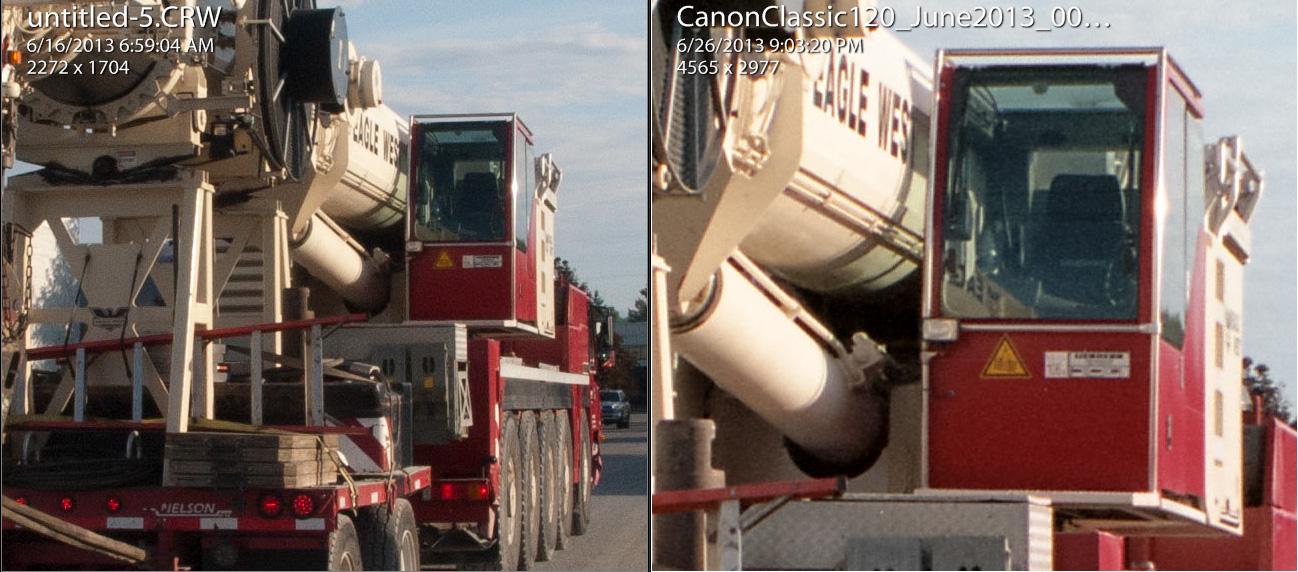
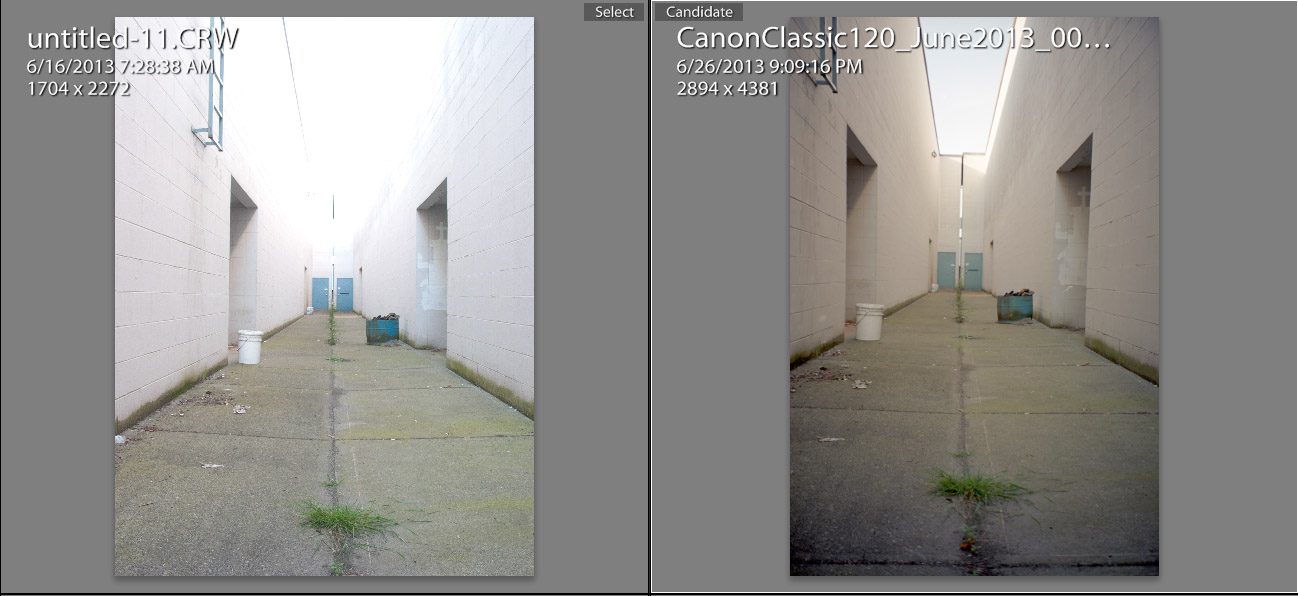
Another thing that isn’t readily apparent is the fact that I had to slightly adjust the exposure a lot with the Canon G2 to prevent it from clipping the highlights something I couldn’t do with the film camera but was completely unnecessary anyway. All through this film has the advantage in dynamic range. The example bellow is without any compensation in a very high contrast situation.
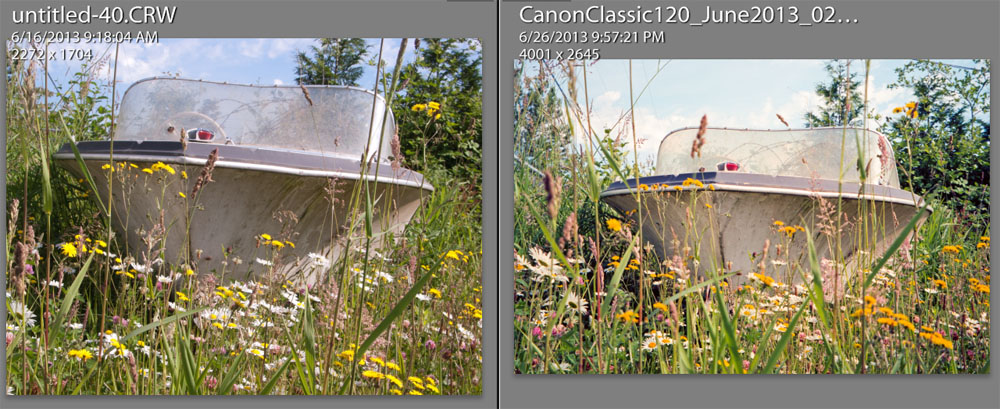
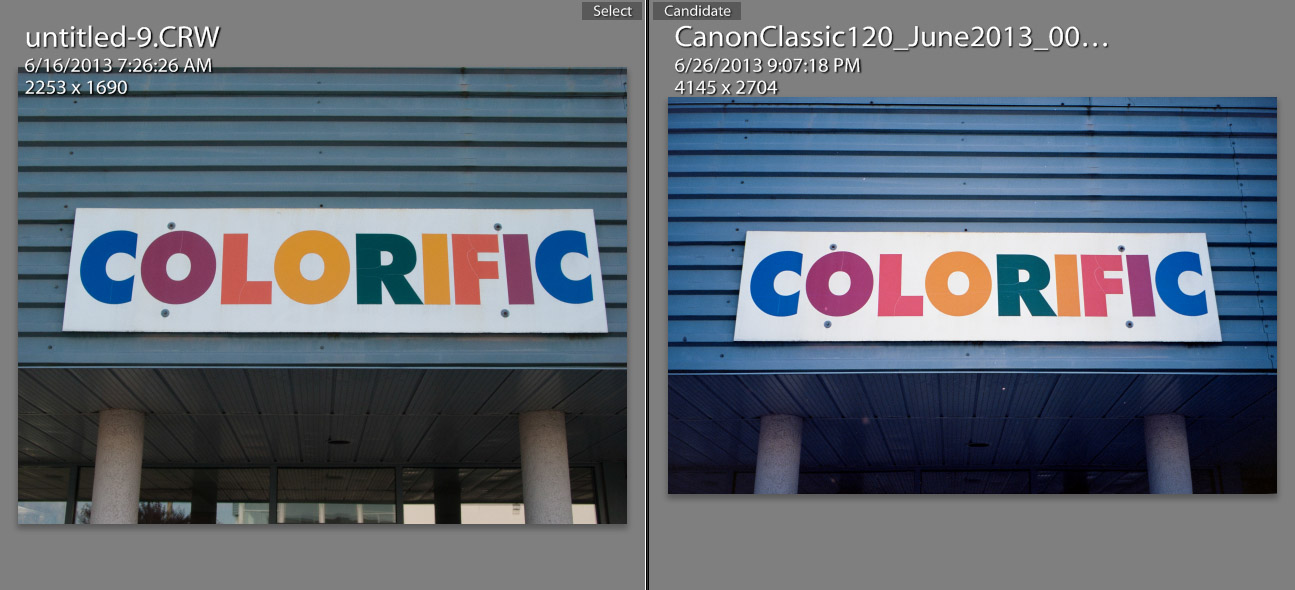
As for colour the digital camera rendered them more naturally.
Conclusion
In 2001 even at about 3 times the cost digital point and shoot cameras did not yet exceed film cameras of the same type and I havent even touched on the issue of speed of operation where the G2 is about as fast taking a picture as the Classic 120 is rewinding a roll of film. That’s an exaggeration but from the time you turn the G2 on till you can take a picture is nearly 6 seconds plus about 2.5 to zoom plus 1 second to focus so you better plan ahead in the past.
I will post a gallery of images from the two cameras in a future post maybe mixing them up between the two cameras.
3 comments | tags: Cameras, Canon, Digital, film | posted in Cameras, Photography
Sep
9
2013
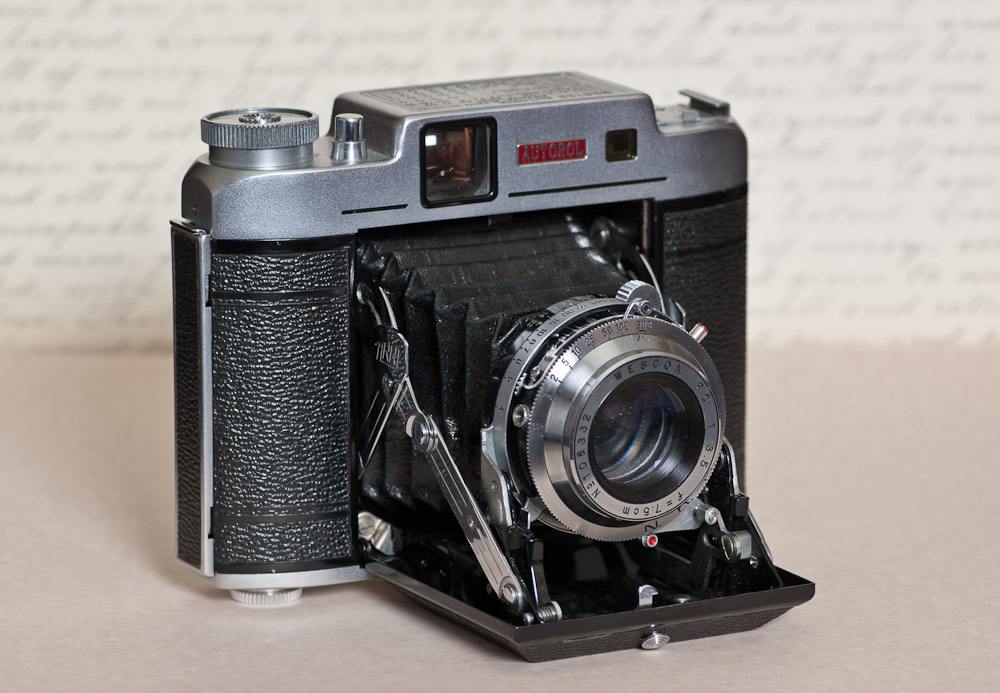
There is no denying the appeal of the square when it comes to medium format. From my original Dianna to my Rolleiflex the square rules. The advantage the Autorol has over the others though is it has a better lens and shutter than the Dianna and is more compact than the Rollei. The results are also great, easily producing images that can by blown up or cropped to other aspect ratios. Read more about it in my post here Wester Autorol or here Wester Autorol Sample
1 comment | tags: camera, film | posted in Cameras, Photography
Sep
7
2013
no comments | posted in Painting
Sep
4
2013
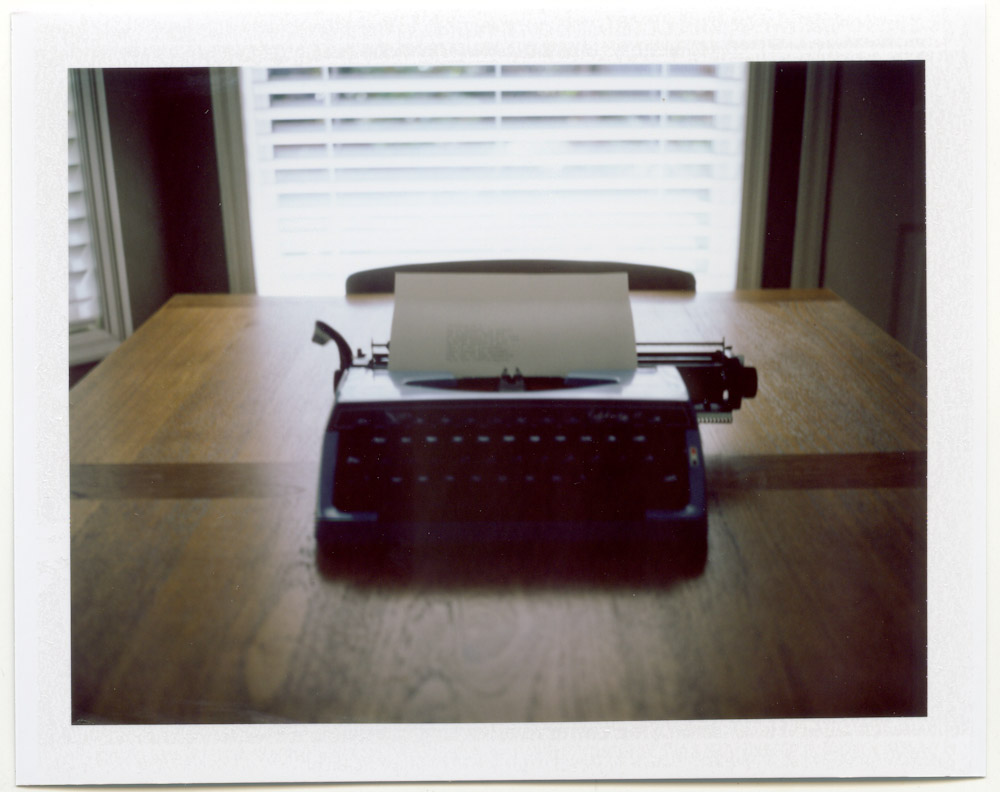
I learned to type in an actual high school typing class on a manual typewriter and to this day I can type using all my fingers without looking at the keyboard. I still can’t spell, I need a computer for that.
The quick brown fox jumped over the lazy dog.
3 comments | posted in Photography
Sep
2
2013
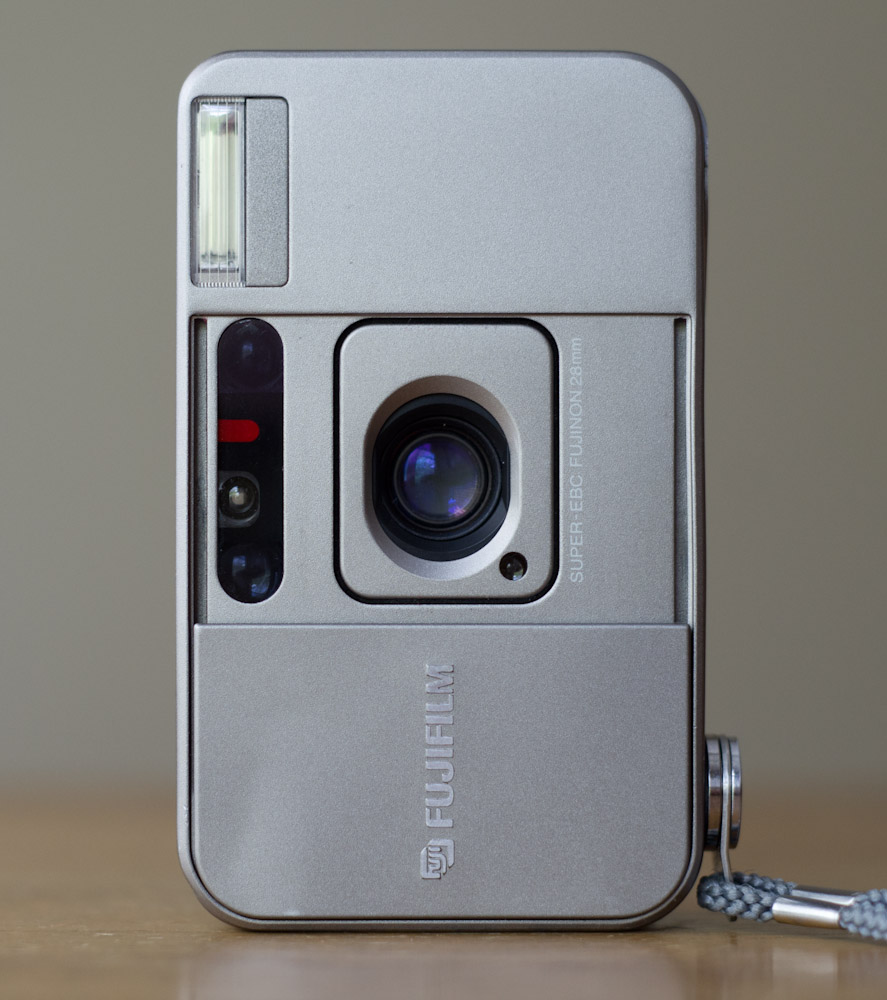
This is my second go around with the Fuji DL Super Mini (Cardia Tiara). The first time the roll of film had scratches running the entire length from a bent tensioning spring. I’ve fixed that and also have a better feel for the camera itself. One thing that is hard to get used to though is how close you need to be for something to fill the frame. That’s just a factor of the 28mm fixed focal length lens but without any ability to zoom it does involve getting right in there.
What prompted my return to this camera was the release of the Ricoh GR which has a lens with the same effective focal length for its sensor size. (18.3mm with an APS-c sensor). I find 28mm to be a fun focal length but not the ideal for general shooting, I much prefer 35mm. The GR somewhat addresses that with a 35mm 10Mpixel crop mode. That’s enough about digital how about some film pictures?
3 comments | posted in Photography
Aug
31
2013
Digital photography has a subset where some people seem to spend as much or more time worrying about their gear as actually taking pictures. It’s as if the acquisition of some new camera or lens will solve all their problems. Or time is spent arguing over some minor improvement that apparently renders everything previous obsolete, maybe they should delete all the pictures they took with such inferior equipment. A part of this obsession is focused (pun alert) on the resolution and pixel level sharpness of images apparently with no regard to how it would look printed and viewed. I recently spent some time looking at what are considered important photographs in a Sotheby’s auction catalogue and a large amount of them are anything but sharp or blur free. Part of the drive towards image sharpness may be the use of large prints in contemporary art. Photographers such as Jeff Wall, Andreas Gursky, and Gregory Crewdson create giant prints which are impressive to see in person, why wouldn’t you want to achieve that sort of image. The thing is you aren’t likely to no matter what camera you use. There are reasons images like these are impressive and it isn’t an accident, real work went into creating them including planning and a concept which doesn’t come with the latest model of camera.
I’m not immune from falling into this trap I’ve wasted more than my fair share of time evaluating camera gear instead of creating or enjoying the work of others. I’m not railing against new cameras, I want the latest greatest too (also the oldest and worst), but having it shouldn’t be necessary to create art. In this photo by Ruth Orkin “American girl in Italy” what’s more important how detailed the image is viewed close up or the content?
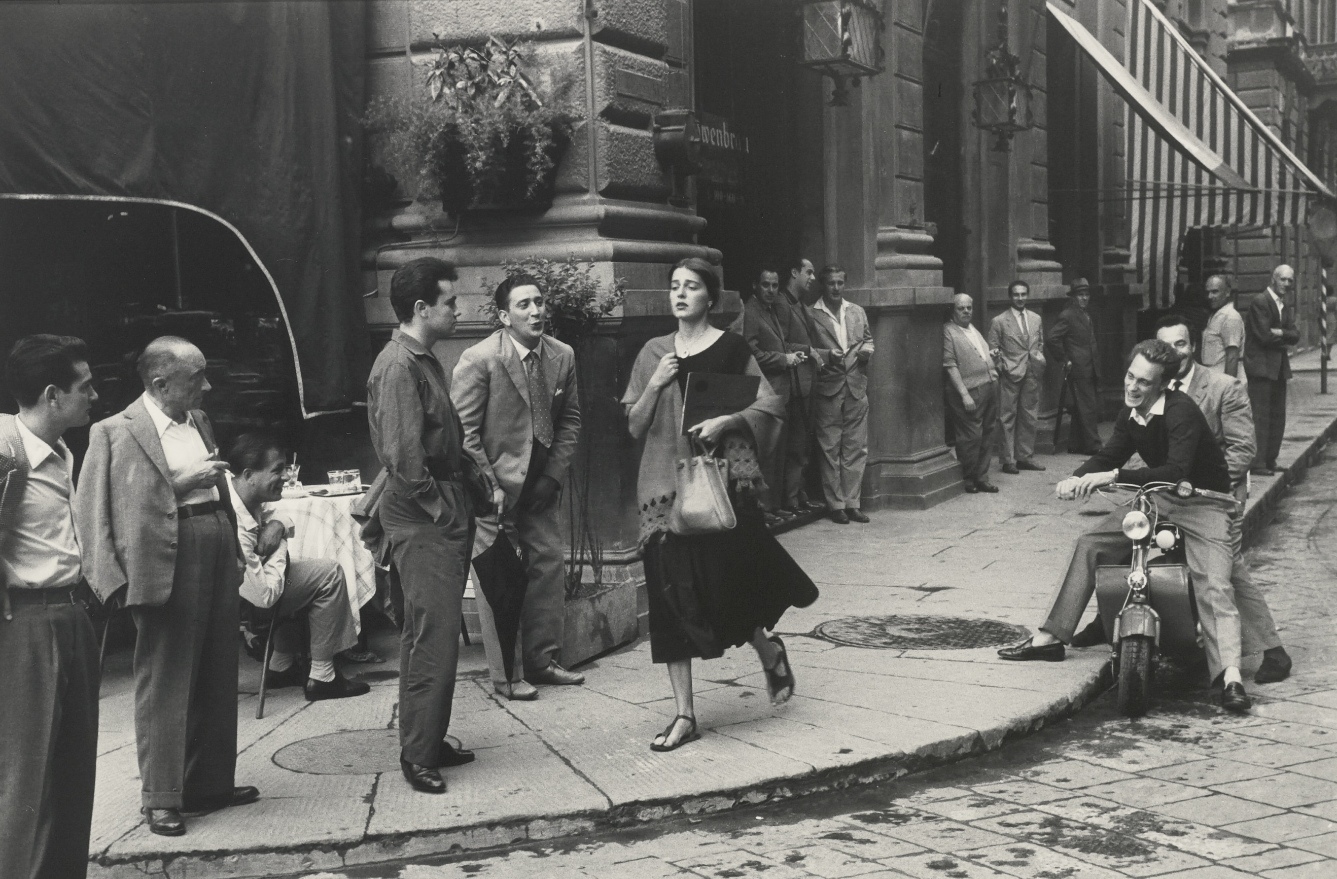
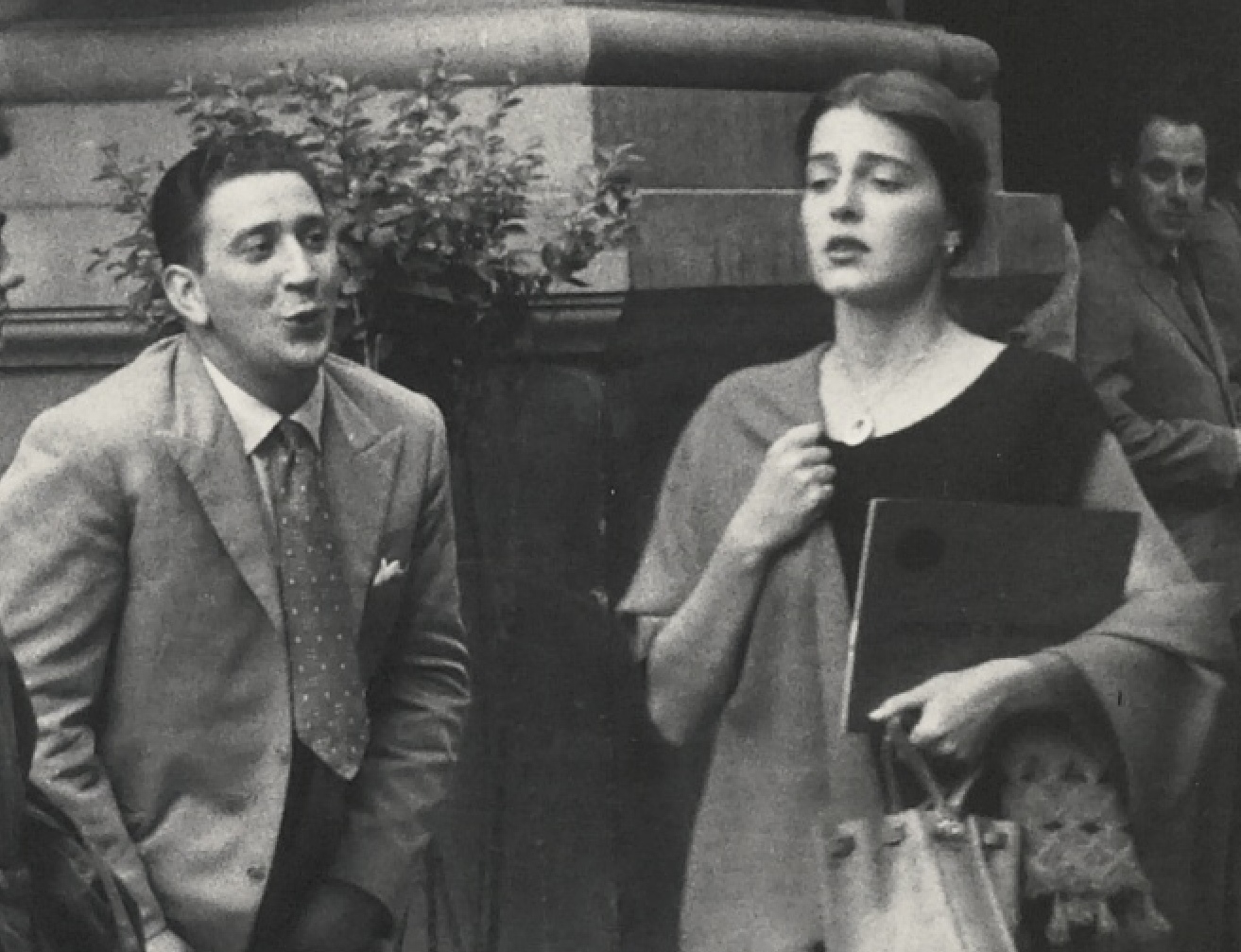
My advice for anyone that finds themselves thinking that maybe they need a new camera or lens is to spend an equal amount of time looking at great photographs from other people and you may soon find out they didn’t even use equipment that matches what you already have.
2 comments | tags: Digital, Photography | posted in Art observations, Cameras
Aug
28
2013
After a slight hiatus from painting with pixels I’ve done a few more iPad paintings. This is of the old Alexandria bridge over the Fraser River. It’s located in the lower part of the Fraser canyon above Spuzzum. There is a small park with a path that leads down to it so those not afraid of heights can walk across its metal decking seeing the rushing river waters bellow. The bridge itself is not in the park and is the responsibility of the ministry of transportation.

5 comments | posted in Painting