With the limited time I’ve had to spend with this lens so far I have been very impressed. Although I want to take more pictures before coming to any conclusions, if the build quality is any indication of the optical performance, I will not be disappointed. The images I am including were all converted to jpegs using the K-7’s built in image processing however I re-sized them in Lightroom.
I thought it would be fun to expose a roll of film through my x-700 which I bought new as a teenager. I shot with colour film and converted to black and white using Lightroom which is just as real as a BW created by a digital camera. I may post the images that I left as colour separately.
Not too long ago I posted about being productive, now I have followed that up with a lull in output. I have been occupied with several thing including taking photo’s of dancers. Rather than continuing to make excuses here is an example.
In an earlier post I described how to store images as filter presets. (K-7 filter Presets).
Now here are some filter presets in action. While any processing done this way can be duplicated through multiple iterations of the digital filters, it is much easier to use the presets for consistency and where there are many steps involved.
Just a quick snap shot with my Sony DSC-V3 processed in Lightroom to create a split toned effect. It allows me to have my visual cake and eat it too. What I mean is that it indulges my desire to have some colour, yet is more like a BW print with heightened contrast. And it’s easy to bake too.
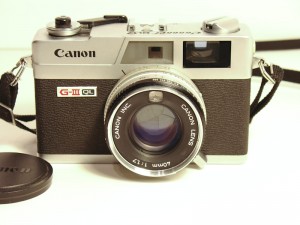
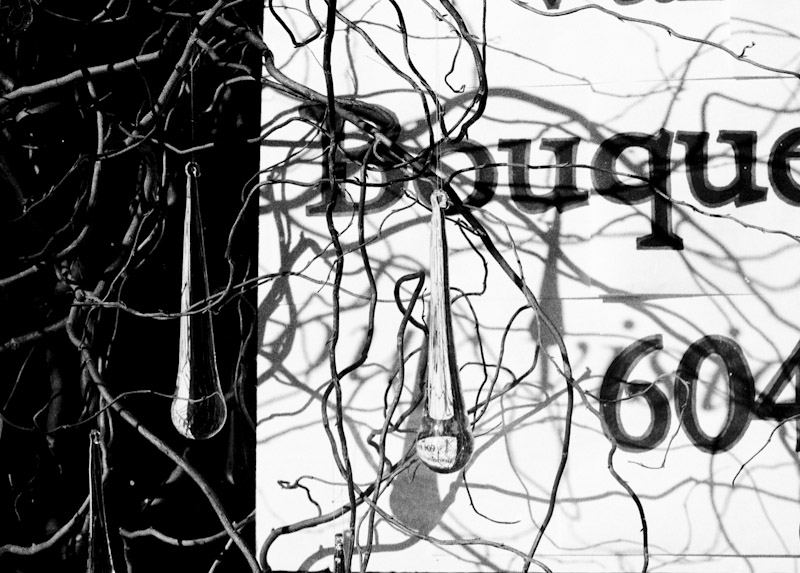
The Ql17 has a measure of cult status in the fixed lens rangefinder record. It’s f1.7 40mm lens is fast and the ability to set both shutter and aperture manually make it a very versatile camera. The shutter is extremely quite and it doesn’t have a pesky LCD screen on the back. I shot these pictures during a walk around the older part of downtown Abbotsford. I used Kodak 200 film and scanned them in after having them developed. The BW images are converted in lightroom where I now do most of my image processing.
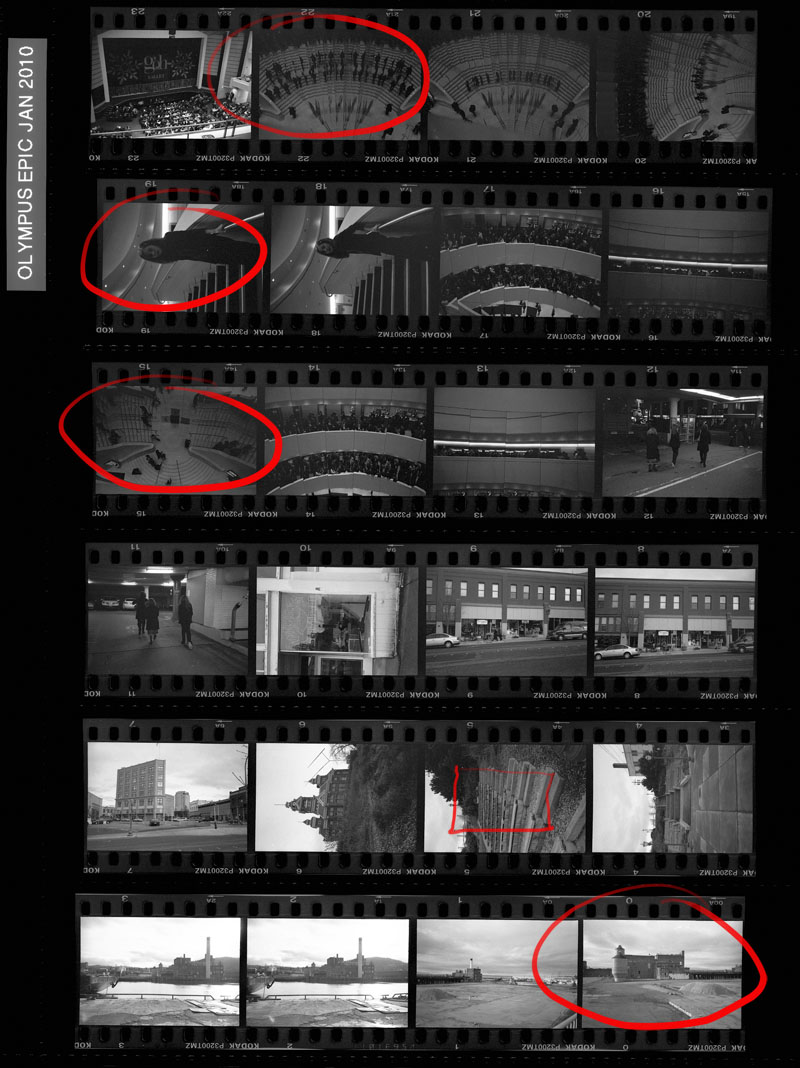
One aspect of photography is nostalgia for the past. We capture a moment so that it is preserved for the future and we manipulate the present to re-capture the past. A contact sheet is an instance of what was once important but no longer has the same relevance. I can quickly sort through thousands of digital photo’s nearly at a glance. In a moment of sentimentality I created a pseudo contact sheet with my scanner. While no longer a viable tool when compared to image database software it is useful when paired with it’s negative.
What is the point of taking pictures if we never look back. That after all it is the intent of much of amateur photography, a memento of the past or evidence that we were there and an event occurred. So regarding the recently done, here is a selection of my images from 2009 that relate to plants. I’ve tried to give a good mixture and have left out many, perhaps I should have a bee list.
The nice thing about having low expectations about something is that there is a better chance of them being exceeded. The Konica pop-10 falls into this category, it looks like a toy it functions like a toy but it takes pretty good pictures non the less.
I can’t find much information about this camera but what I do know is that it is plastic has a maximum aperture of f4, which can only be achieved with ISO 100 film and the flash on. With 400 ISO film it appears to be stopped down to somewhere near f 16. There is a photo cell beside the viewfinder that likely functions to control the LED indicator for the flash warning as I haven’t seen any variation in speed from the shutter. It has an interesting top plate that mimics a rangefinder even though it is fixed focus. The flash is powered by a single AA battery and must be turned on manually once the clam-shell lens cover has been slid back. It’s easy to use and really delivered sharp well exposed images with it’s 35mm lens.