Feb
22
2013

I’ve been gravitating towards my Fuji cameras lately. The older the better so this one is the best (actually the Fujica 35SE is but I tell all my cameras they are the best) Okay I don’t actually tell my cameras they are the best that would be weird, I just write about it which isn’t. The most interesting element of this camera is the Copal Magic shutter which can provide completely automatic exposure, I however over ride this and shoot it manually which is less magical.
Yes that’s two beaver statues on one roll of film, If only I could have found one more it would have been a dam party.
2 comments | posted in Cameras, Photography
Feb
20
2013

A diamond treated rough, what a little gem. I love the design and finish, the fact that mine is missing the plastic around the viewfinder and that I’m using hockey tape to seal the back hardly detracts. I also like the notion of the 28mm wide lens which pairs nicely when carrying another camera with a longer focal length.
I try to highlight for each camera one thing that sets it apart and for this Fuji it has to be the focus system. In addition to autofocus there is also manual focus with its many steps between 0.35m and infinity as well as snap focus. Snap focus sets focus to a fixed distance and uses a small aperture to provide a zone where everything is in relative focus. This is great for moving subjects or when focus would otherwise be difficult to achieve.
My first roll of negatives through the camera were all scratched though and I could see when I opened it up a little pile of film powder. I identified the source of it as a bent spring tensioner and fixed it. That is one of the reasons I test cameras with outdated film, to find and fix problems. Sometimes I even like the look old film gives me, but not scratches they aren’t cool.
19 comments | posted in Cameras, Photography
Feb
17
2013

Not bad considering what I did to this camera. In a nut shell I stripped out the mirror, prism and all it’s electronics leaving primarily a lens and a shutter. A well-regarded lens though with it’s 6 elements and wider than normal 40mm focal length.
It functioned and I’m pleased, the pictures turned out well and the only issue seemed to be that the spacing of the negatives was a little inconsistent but none of them actually overlapped. I can now use film I didn’t find in a thrift store in it. Knowing that it works I will also take the time to adjust the viewfinder so that I can try some more careful compositions. I also want to shoot some more images with shallow depth of field which is a real challenge of ones ability to estimate distance but the bokeh seems worth the try.
1 comment | posted in Cameras, Photography
Feb
14
2013
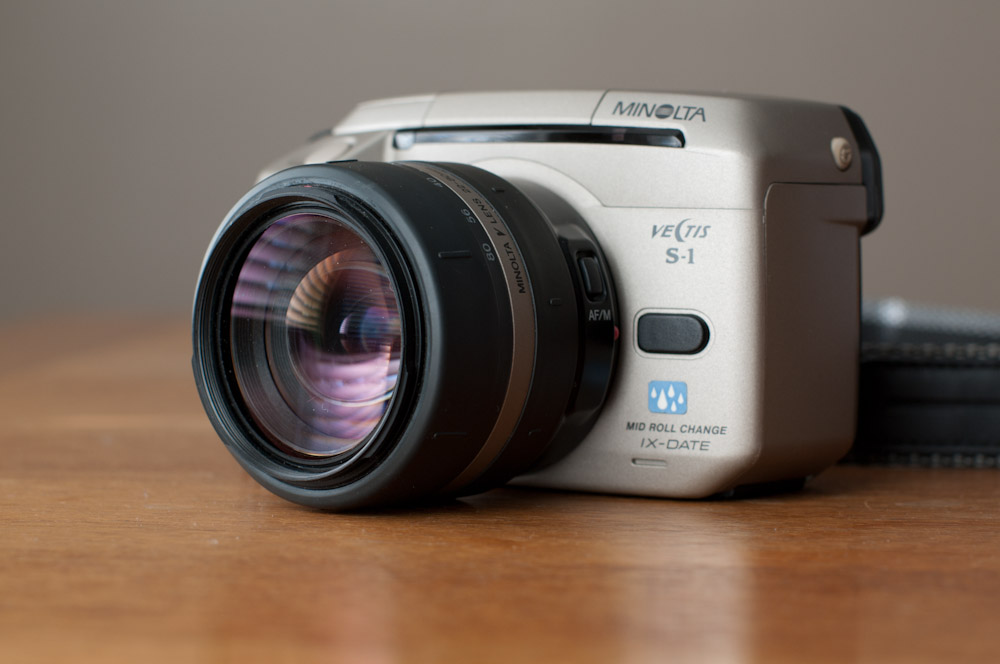
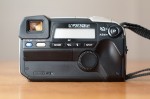
Not much point saving APS film for a rainy day unless it’s in the Minolta Vectis S1, a rainy day camera. As APS film gets further and further from its best before date it goes from bad to worse. This film was a gift from a fellow photographer (DLTphotographic) so I’m not complaining in fact I’m grateful but back in the heyday of APS ( there was no heyday) it was already questionable. That stigma of inferiority still stains the term APS even now when it is much more likely to be used to refer to the digital sensor size APSc. On the basis of only data a digital full frame sensor of the same generation will be better than an APSc sensor but the gap between their performance is no where near the difference between APS film and 35mm film. What point am I trying to make, well there seems to be a general theme on the Internet forums that for serious photography you need to have a “full frame” sensor based camera but this ignores the final output. Two prints from two excellent cameras with good lenses but different size sensors are hard to distinguish. The photographer continues to be the most important part of photography for now. Now here are some crappy pictures to look at.
3 comments | posted in Cameras, Photography
Feb
11
2013
Seeing as I’ve lost track of where I was with the taking of Polaroid pictures and posts I’ve changed directions and am now counting down my remaining stock of Polaroid Spectra film. So here is P minus 24

no comments | tags: film, polaroid | posted in Photography
Feb
8
2013

Well this is a very different post than I thought I would be writing. You see there were only 2 frames left on the roll of film I was shooting when I lost this camera. I’m more annoyed at the loss of images from the last few weeks than of loosing the camera. For that matter it bothers me more to loose the battery than the camera those CR2 batteries are expensive.
1 comment | posted in Photography
Feb
6
2013
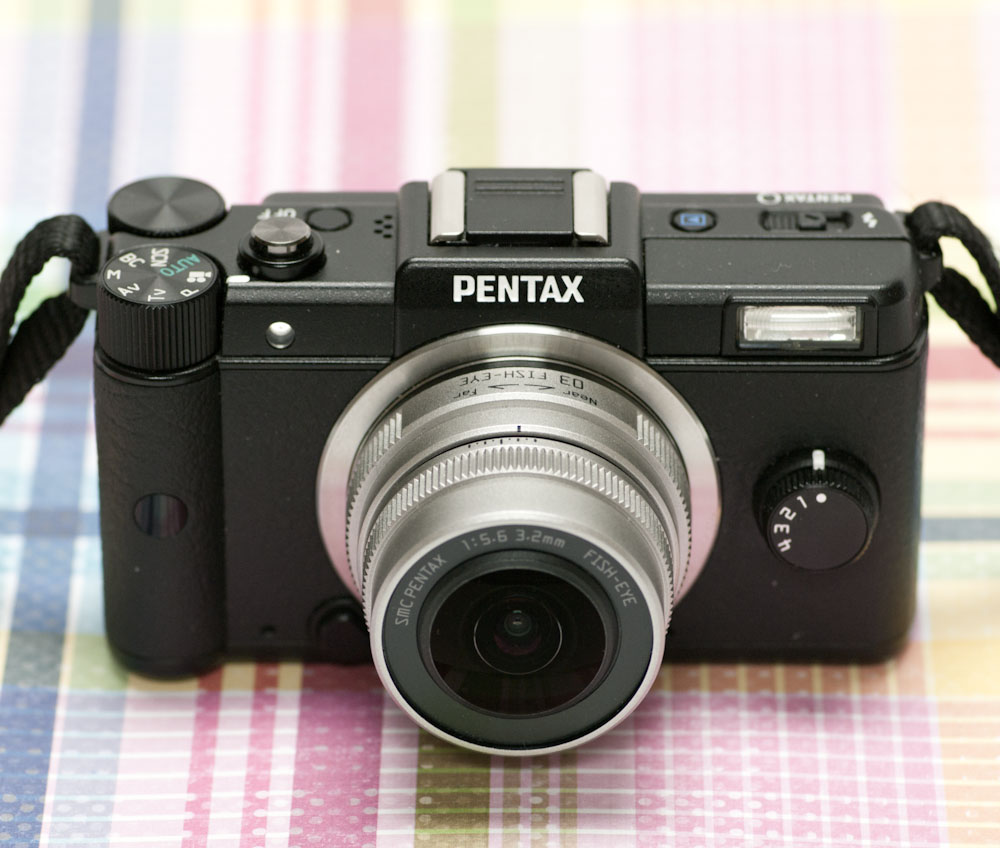
While a fish-eye lens is not something you would want to use too often. Much like a hammer isn’t always the right tool, there are times when it is. What really distinguishes this camera lens combination is the fact that it fits in a coat pocket.
Focusing is completely manual and instead of a distance scale there are tiny division marks. Because of the ability to focus from mere inches to infinity while only turning the focus ring about 30 degrees it can be challenging to achieve sharp focus. Using the zoom in while focusing feature of the camera aides this greatly. For other lenses with shallower depth of field, focus peaking is great but with this lens it is not as useful. I also find it a draw back that the lens can be turned past infinity focus, in fact infinity focus is reached at only 3/4 of the total movement. It seems to be best to leave the focus set near the infinity setting and only make adjustments for extreme close ups.
My biggest problem while using this lens though is that I constantly ruin shots by including my hands in the image. It’s so small that it is easy to find after the fact a finger sausage in an image corner. Moving my hands is something I still need to train myself to do after focusing.
7 comments | posted in Cameras
Feb
4
2013

Previously on the Fuji DL500 Files: Our hero was uncertain of the quality from this optical oddity. In this episode it becomes much clearer that the lens performs best at 45mm despite the flare it causes and that the 28mm setting is a poor performer. As the 45mm focal length is achieved by swinging an additional optical group into the light path it is apparent that the central area of the lens is fine, it is the outer corners at which the wide setting fails. After only two episodes the Fuji DL500 files are cancelled.
I’m not quite sure how but according to the Technical Image Press Association it won the award for best 35mm compact camera in 1991, perhaps they never actually took any pictures with it.
8 comments | tags: film, Fuji | posted in Cameras, Photography
Feb
1
2013
Look ma, it’s a mirrorless camera!
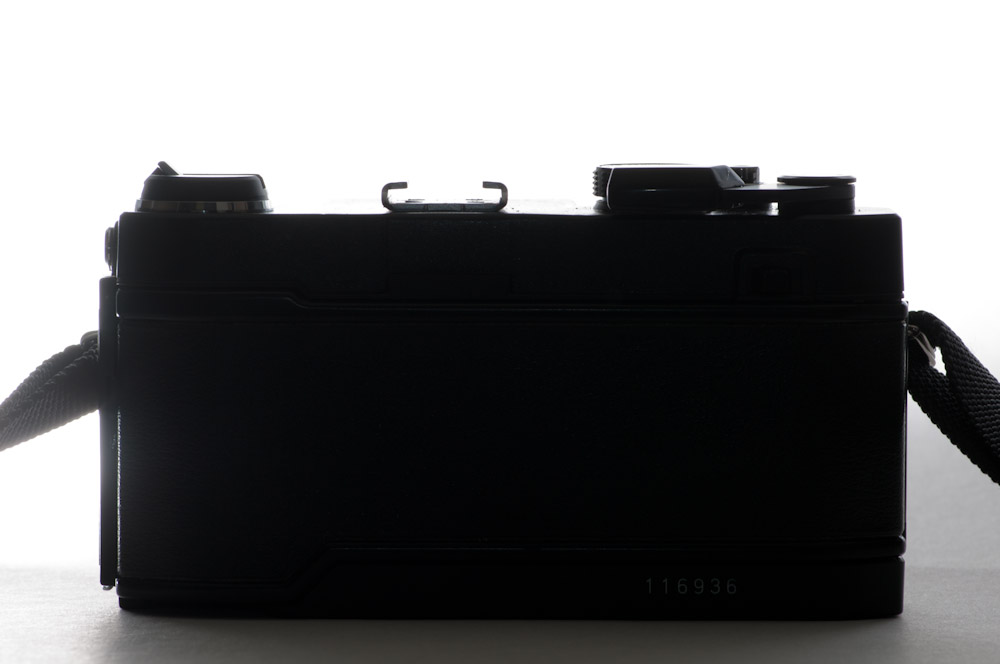
I picked up this Konica Autoreflex TC for a mere $5 due to its broken mirror. That wasnt a problem because I only wanted it for the lens which was also damaged. The Lens was twisted such that it couldn’t be focused. After repairing the lens I figured why stop at that, so I removed the broken mirror and its mechanisms, the metering and prism. Not wanting to leave a gaping hole (not sure but that might let light in) I cut and shaped pieces of plastic and rebuilt the top plate to be flat across the top like a rangefinder. only now the camera has absolutely no viewfinder. Luckily I had a broken Konica X15 flash that I cut and shaped into a case for a viewfinder. and as you might guess I had previously taken a viewfinder from a broken point and shoot. I really see little point of a how-to because it’s a matter of taking whatever you have on hand and adapting it to a new purpose. I will say though you can accomplish quite a bit with patience and little files.
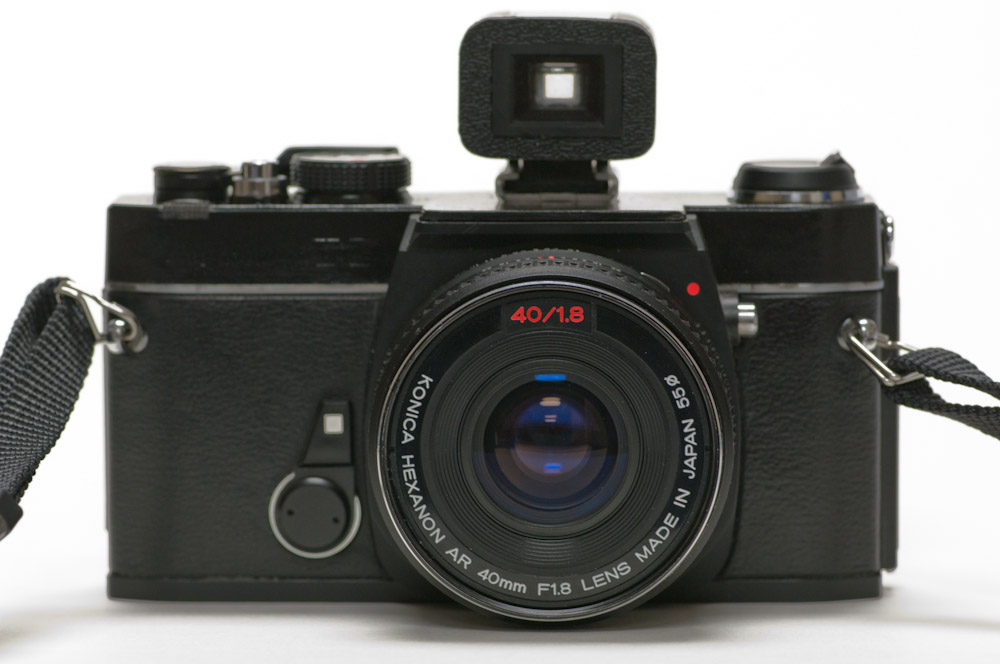
This is all possible because the cameras is completely mechanical and doesn’t require any battery power or metering to operate.
To recap I’ve gone from an SLR with a viewfinder and metering to a….scale focus….thing….with an external viewfinder….thing. Now I’ll run a roll of film through it and see if it works.
6 comments | posted in Photography
Jan
30
2013

I had hoped for better results from the Yashica T AF with its 35mm Carl Zeiss T* optics but I was unfortunately let down by the focus system. My copy no longer focuses to infinity. The reason for my optimism came from several factors beyond the lens; It has a manual ASA setting that can by easily used as a rudimentary exposure compensation system, it only fires the flash when you activate it rather than defaulting to on like so many other point and shoot cameras including the fantastic Yashica T3. Aesthetically I like the camera too for its angular glossy plastic and smoked glass lens cover that swings away to reveal the lens for each exposure, this all seems like it could only have sprung from the early 1980’s.
Back to my copy of this camera, only where I pointed the camera at nearby objects did it achieve correct focus, so all the shots into the distance are out of focus. Oh well I will mark the camera with a tag of shame and put it into the parts bin.
5 comments | tags: film, Yashica | posted in Cameras, Photography